Birthday Parties Should Be Sacred (And Yet)
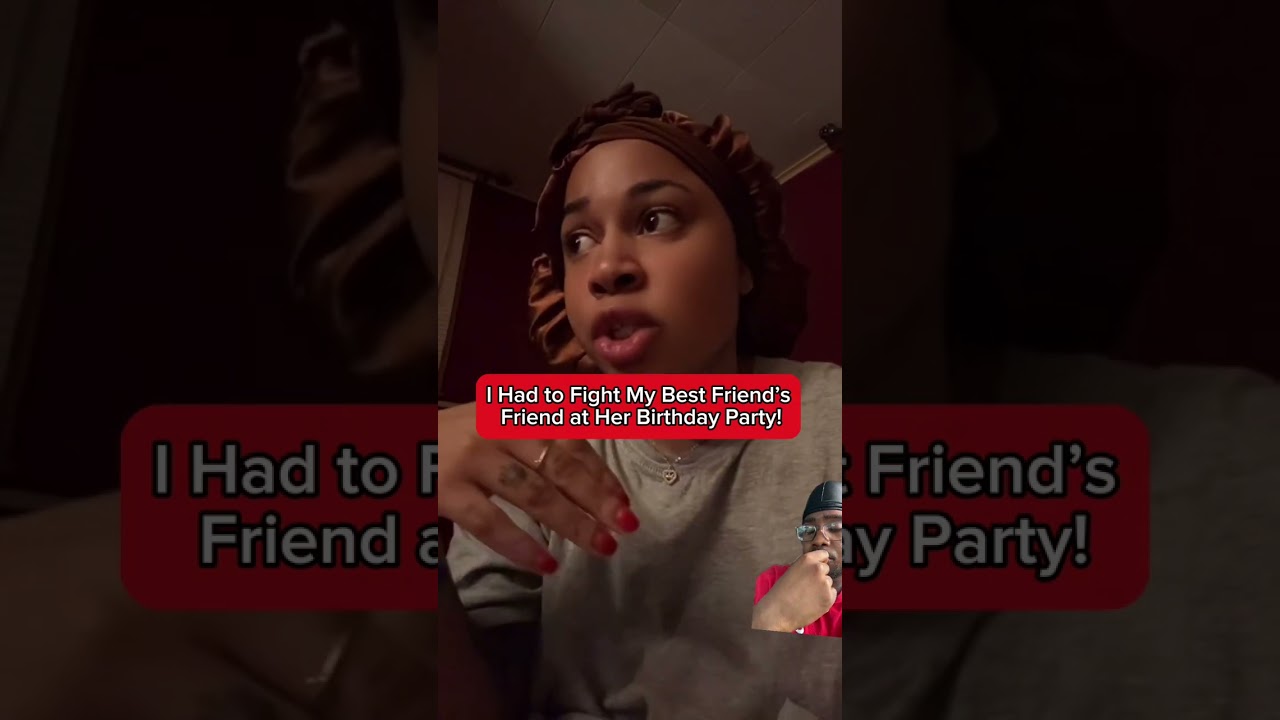
There is an unspoken rule of the universe that birthday parties are supposed to be a safe zone. You show up, you hug the birthday girl, you eat something you probably shouldn't, and you go home with a slightly smeared lip gloss and a good memory. That's the deal. So when we heard this story from our community — a night that started with balloons and ended with fists — we genuinely needed a moment to sit with that. Because how does it get there? How does a celebration become a crime scene?
The narrator in this story went to support her best friend on her birthday. That's it. That was the whole assignment. And somehow, by the end of the night, she was in a physical altercation with one of the birthday girl's other friends. Not a screaming match. Not a dramatic exit. An actual brawl. We've been at some chaotic parties in our time, but this one has us genuinely shook — and deeply curious about every single detail that led up to it.
The Tension Was There Before Anyone Threw a Punch
Here's the thing about fights that 'come out of nowhere' — they almost never actually do. And this story is a perfect case study in that. The narrator describes strange vibes from the moment she arrived. That low-level social static that you feel in your chest before your brain even processes it. You know the feeling: someone looks at you a beat too long, a conversation stops right as you walk up, someone's energy is just... off. Most of us have been there and talked ourselves out of it. 'I'm probably imagining things.' 'It's her birthday, let's just have fun.' 'I don't want to cause drama.'
That instinct to smooth things over, to not be the one who makes it weird — it's so deeply human. And it's also, unfortunately, sometimes the thing that lets tension build past the point of no return. Because when you don't name the awkwardness, it doesn't go away. It just sits in the room, getting bigger, waiting for the one moment when someone decides they're done pretending everything is fine. According to the narrator, that's exactly what happened here. The strange atmosphere escalated rapidly, and what felt like social discomfort transformed into something physical before anyone could really stop it.
The Red Flags We'd Have Clocked (In Hindsight, Obviously)
We love doing this exercise because it's genuinely useful — not to blame anyone, but because pattern recognition might save your night someday. Looking at what we know from this story, here are the signals that were waving before everything exploded:
First: tension you can feel but can't explain is real tension. Trust it. That 'strange vibe' the narrator noticed isn't paranoia — it's your nervous system doing its job. Second: a party where you don't know everyone equally is a social minefield. The birthday girl's other friends are essentially strangers to you, and strangers don't owe you warmth. When they're actively giving you cold energy, that's information. Third: celebrations raise emotional stakes in weird ways. People get territorial about the birthday person. Old dynamics, old jealousies, old 'she was MY friend first' energy can bubble up in ways that seem completely disproportionate to outsiders. And fourth — and this one is big — when the environment shifts from awkward to actively hostile, the window to exit gracefully is shorter than you think.
Would we have left earlier? Honestly, probably not. Because who wants to be the person who dips out of their best friend's birthday over a bad feeling? That's the trap. And it's a trap a lot of us have walked straight into.
What a Night Like This Actually Costs
Beyond the physical chaos of the altercation itself, there's a layer to this story that really gets us: the narrator went there for her best friend. She was there out of love, out of loyalty, out of the simple desire to make someone she cares about feel celebrated. And instead, the night became about something else entirely — something that had nothing to do with the birthday girl's joy and everything to do with conflict that, by the sounds of it, the narrator didn't even start.
That's a specific kind of exhaustion. When you show up in good faith and the situation punishes you for it anyway. When you're left replaying every moment, asking yourself what you could have done differently, even when you weren't the one who brought the chaos. The narrator walks through the sequence of events in detail — the buildup, the escalation, the brawl itself — and what comes through is someone genuinely trying to make sense of how a single night unraveled so completely. That impulse to understand it, to break it down, to find the moment where the story changed? We get that completely. It's how you process something that shouldn't have happened.
Our take
Curtis and I have talked about this one more than we expected to, because it hits something real. We've both been in situations where we showed up for someone we love and ended up absorbing drama that had nothing to do with us. It's disorienting in a way that's hard to explain — you came with good intentions and you're leaving with a story you didn't ask for. What gets us about this situation is the speed of it. Strange vibes to full brawl, apparently without much runway in between. That says something about the pressure cooker that mixed company and celebration can create. We're not here to judge anyone's choices in the heat of a moment — adrenaline is real, and social situations can escalate faster than your rational brain can keep up. But we do think this story is a reminder that your gut feeling at a party is worth listening to. If the room feels wrong, it might be.
Some nights are just going to go sideways no matter how good your intentions are — but the strange vibe you feel the moment you walk in the door is almost never wrong. Next time, trust it a little sooner.