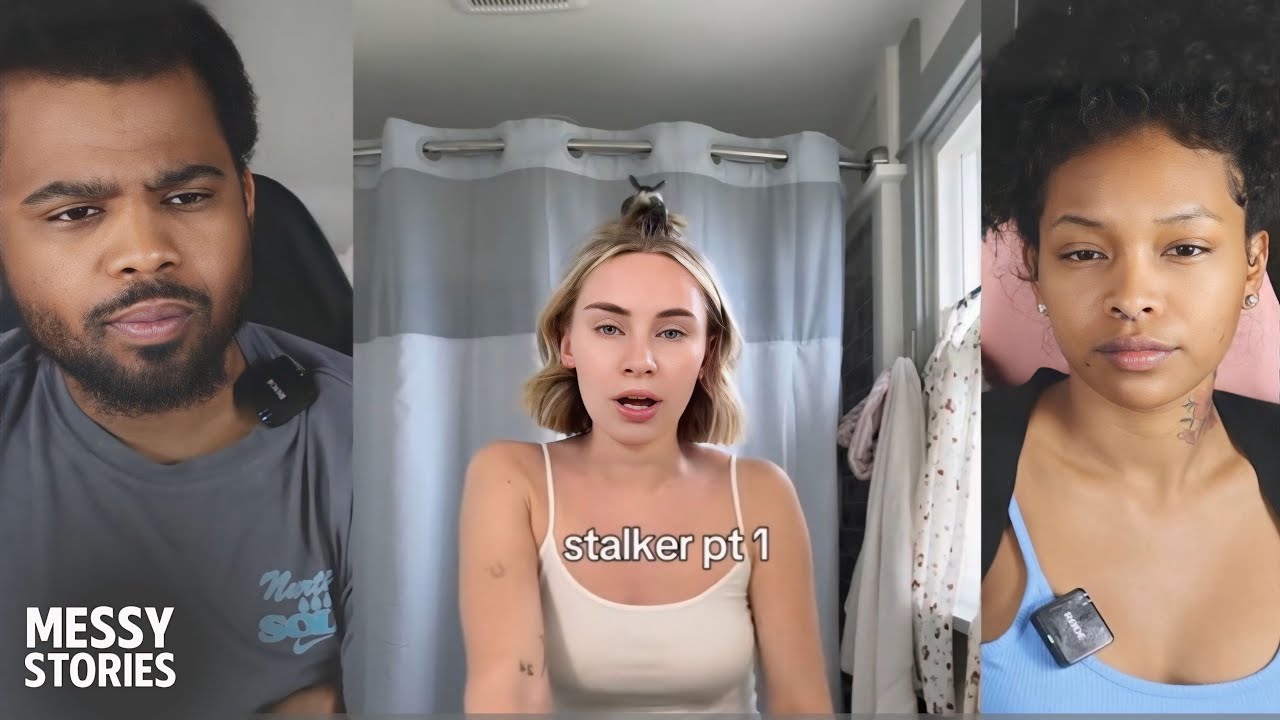
When 'No' Doesn't Register — The Anatomy of Delusional Stalking
Most of us have had someone not take a hint. An ex who texts a little too long after the breakup, a situationship that doesn't know when to dissolve. That's uncomfortable. What this woman has been living through for three years is something categorically, terrifyingly different — and we need to sit with that distinction before we go any further.
The man at the center of this story was diagnosed with severe delusional disorder. That's not a detail thrown in for context. That is the entire architecture of why this situation is so uniquely dangerous. Delusional disorder — particularly the erotomanic subtype, where a person genuinely believes someone is in a romantic relationship with them — doesn't respond to logic, to rejection, or even to legal consequences the way most behavior does. You can't reason someone out of a belief they didn't reason themselves into. She didn't do anything wrong. She didn't lead him on. In his mind, a relationship exists that has never existed in reality. And that gap between his world and the real one is exactly where her safety keeps falling through.
Notes at Work. Gifts at Midnight. Texts From Jail. The Escalation Nobody Stopped.
Let's walk through what three years of this actually looked like, because the details matter and they are not okay to skim past.
It started — as these things often do — with something that probably felt uncomfortable but dismissible. Then came notes left at her workplace. Think about that for a second. He found out where she works. He showed up there. He left physical evidence of his fixation in a space where she was supposed to feel professional, normal, safe. That's not a love note. That's a message that says: I know where to find you.
Then gifts delivered to her door in the middle of the night. Midnight. He was outside her home while she was sleeping, leaving things on her doorstep. The intimacy of that — the violation of it — is almost hard to articulate. Your home is supposed to be the one place.
She did what she was supposed to do. She got a restraining order. Then she got a second one. He violated both. And then — and this is the part that made our jaws drop — he sent her messages from a jail phone while he was incarcerated. He was literally behind bars and still found a way to reach her. At every single escalation point, when the system had a clear opportunity to intervene decisively, it fell short. She kept doing everything right. The institution kept blinking.
He's Out. He Found Her TikTok. And the System Has 'Exhausted Its Options.'
Here's where we are right now, and why we haven't been able to stop thinking about this story since it landed in our community.
He has been released back into the community. And he has found her TikTok account. He viewed her content. Which means somewhere out there, a man with a documented delusional fixation on this woman sat and watched her — her face, her voice, her life — through a screen. And she knows he did.
There is something uniquely modern and uniquely horrifying about this. We talk a lot about the double-edged sword of putting yourself online, but most of us mean that in the context of trolls or bad dates. Not this. TikTok's view counts and follower lists can become surveillance tools in the wrong hands, and in this case those hands belong to someone who has already proven he will not stop.
The question her story raises — and doesn't have a clean answer to — is what recourse looks like when the traditional legal tools have already been tried and failed. Two restraining orders. Documented violations. Incarceration that didn't hold. A diagnosed mental health condition that the system acknowledged but couldn't contain. What is the next move? Platform reporting? A new legal strategy? Going fully private online and essentially letting him dictate the shape of her life? None of those options feel like justice. All of them put the labor back on her.
What Would You Actually Do? Because We've Been Asking Ourselves.
We want to be real with you, MessyFam, because this story deserves more than a reaction — it deserves an honest conversation.
The impulse a lot of people have is to say 'go off the grid' or 'delete everything.' And look, we understand the instinct. But there's something deeply unfair about a woman having to erase her digital presence, potentially her income, definitely her community, because a man with a dangerous fixation won't leave her alone. Why should she disappear? Why does the burden of invisibility always land on the person being harassed?
At the same time, practical safety has to come first. Locking down accounts, making TikTok private or under a different identity, working with a stalking-specific victim advocate (not just a general domestic violence resource — stalking cases have their own legal nuances), and documenting every single digital interaction as potential evidence — these are real steps that matter.
But we also think it's worth naming that she is doing something brave by telling this story at all. Visibility is a risk for her, and she's taking it anyway, probably because she knows someone else is living a version of this and needs to hear that they're not alone and they're not crazy. That kind of courage deserves to be met with the systemic support it never quite got.
Our take
Curtis and I went back and forth on this one for a while, which is how we know it hit different. The thing that keeps getting us is the jail phone detail — like, that should have been the moment everything changed legally, and it just... didn't. The system looked at documented evidence of obsession, violation, and escalation, and kept returning to baseline. And now she's watching her TikTok views and wondering if that number includes him. That's not a way to live. We don't have a tidy takeaway here because this story doesn't have one yet. What we do have is a lot of respect for a woman who is still standing, still speaking, and still fighting a situation that would have broken a lot of people a long time ago. We're rooting for her loudly.
When the legal system runs out of tools, the story isn't over — and neither is her fight. This one is still unfolding, and it deserves every set of eyes on it.