The Day Everything Became a Lie
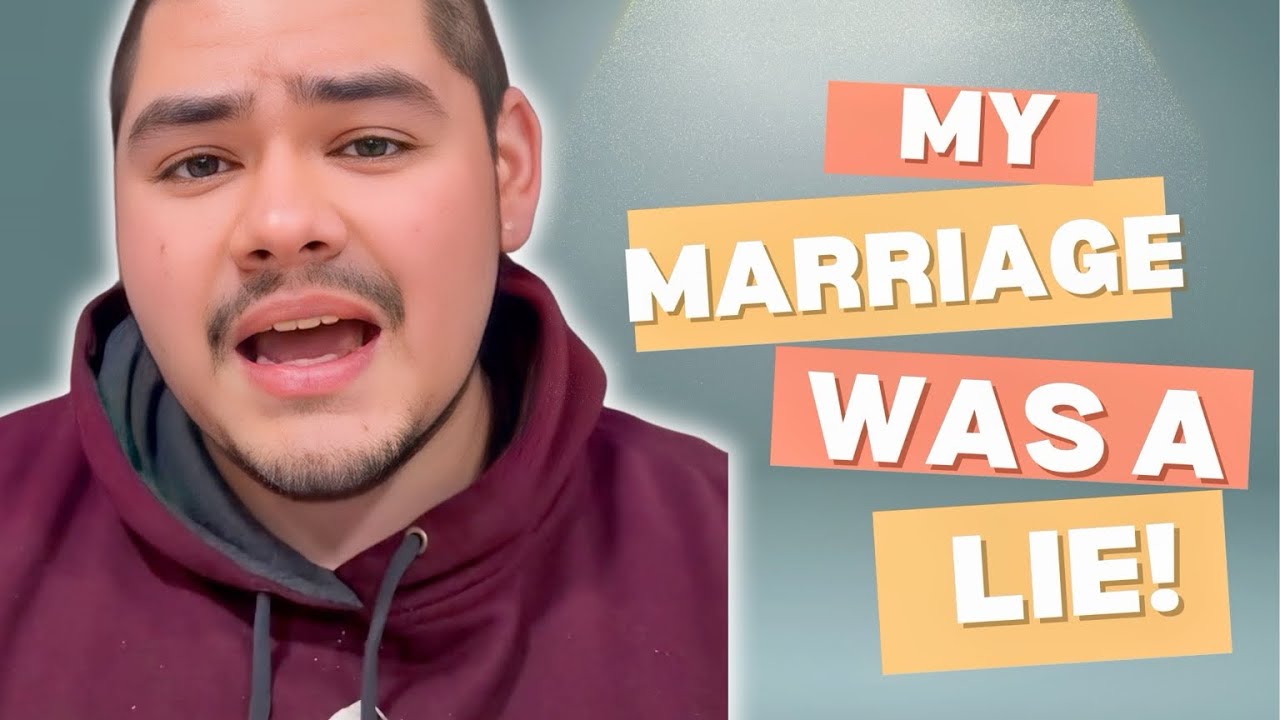
There are breakups, and then there are the ones that don't just end a relationship — they retroactively destroy it. This is the second kind. According to the story shared with our community, a man's four-year marriage didn't slowly erode through arguments or distance or the slow drift that takes so many couples under. It collapsed in a single day. One conversation. One admission. His wife told him she had never loved him. Not that she stopped loving him. Not that she fell out of it somewhere along the way. Never. As in: not on the wedding day, not during year one when everything is supposed to feel electric, not during any of the 1,400-plus days they spent building what looked, from the outside, like a real life together. We don't know exactly what she said or how she said it, but we know the effect: total demolition. And honestly? That specific kind of revelation might be the cruelest thing one person can say to another. Because it doesn't just hurt you in the present — it reaches back and poisons every memory you thought you had.
Were the Signs There All Along — Or Was She Just That Good?
This is the question that's going to haunt him for a long time, and honestly, it's the one we keep turning over too. There are two very different stories living inside this situation. In the first version, the red flags were there — maybe she was emotionally distant in ways he rationalized, maybe she never quite matched his energy in the relationship, maybe she went through the motions of partnership without ever fully showing up. We've all known couples where, in hindsight, one person seemed more invested than the other. The quiet asymmetry that everyone around them could feel but nobody said out loud. In the second version, she was simply that skilled at performing a life she didn't actually want. And that version is somehow worse, because it means no amount of attentiveness on his part would have caught it. Some people are extraordinarily good at compartmentalizing — at showing up to the wedding, the anniversaries, the Sunday mornings, the hard seasons, all while keeping their true interior life completely sealed off. We're not here to call her a monster. But we are here to say: that level of sustained concealment over four years is not a small thing. That's not a moment of weakness or a bad decision made in crisis. That's a long, deliberate silence that had real consequences for a real person.
The Red Flags We'd Be Looking For in Hindsight
Since we're breaking this down the way we do, let's talk about what those warning signs might have looked like — because even if he missed them, understanding them matters for anyone reading this right now who might be in something that feels slightly off. Emotional unavailability that gets explained away is a big one. When someone consistently deflects vulnerability, changes the subject when things get deep, or seems more comfortable with the routine of a relationship than the intimacy of one — that's worth paying attention to. Another flag: relationships where one person is doing the majority of the emotional labor, the planning, the reaching. If you're always the one initiating the meaningful conversations, always the one pushing toward connection, always the one who seems more excited about your shared future — that imbalance is data. There's also the question of whether she ever actually chose him in the active sense, or whether the relationship was something she fell into and stayed in out of inertia, comfort, or fear of disruption. Sometimes people don't plan an exit so much as they just never fully arrive. And then one day they say what they've been not-saying for years, and it lands like a bomb. Was this a planned exit or an impulsive confession? That part, we genuinely don't know. Both are possible. Both are devastating in different ways.
What You Do With Wreckage Like This
Here's the thing about a revelation like this — it doesn't just end a marriage, it creates an identity crisis. Because if you spent four years being someone's husband, making decisions as a unit, building a life around a partnership that wasn't real on one side, you have to go back and figure out who you actually are outside of something that was, at least partially, a fiction. That's not a small ask. That's a complete reconstruction of self. And the cruelest part is that the grief is complicated in a way that normal heartbreak isn't. With a regular breakup, you're mourning something that was real and ended. With this, you're mourning something you're not even sure existed the way you thought it did. You're grieving a marriage and a memory simultaneously. We don't know how this story resolves — whether he finds clarity, whether she offers more explanation, whether any of it eventually makes sense to him. What we do know is that the question he's sitting with right now — did I miss this, or was I deceived — is one of the hardest questions a person can carry. And the honest answer might be: both, and neither is his fault.
Our take
Curtis and I talked about this one for a while after we read it, and we kept coming back to the same thing: four years is not a blip. That's holidays and hard seasons and ordinary Tuesdays and all the small moments that make up a real life. The idea that someone can move through all of that without a single genuine feeling of love — and say nothing — is genuinely difficult to wrap our heads around. We're not in the business of villainizing people, and we don't know her full story or what was driving her silence. But we do think he deserves to be angry. He deserves to grieve loudly and messily and without anyone telling him to be reasonable about it. And we hope — really hope — that whatever comes next for him is built on something true. He clearly knows how to love somebody. He just deserves somebody who loves him back.
A marriage that ends in 24 hours was probably struggling in silence long before that — and the hardest work isn't surviving the confession, it's figuring out what was real and building something honest from there.