Let's Set the Scene, Because the Details Matter
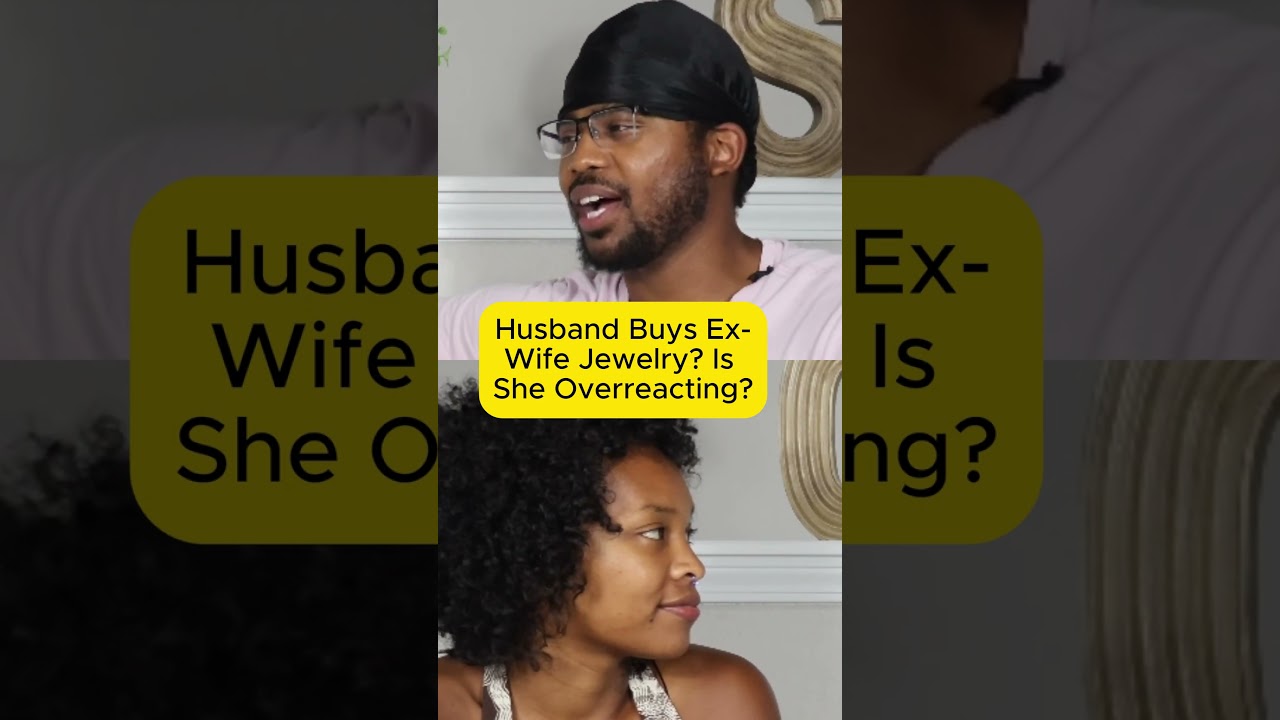
Okay, so here's the setup: a woman discovers that her husband has gone out and purchased jewelry for his ex-wife. Not borrowed something. Not forwarded a package. Bought. Jewelry. For the woman he used to be married to — or at least seriously committed to. And now our narrator is sitting with this information, turning it over in her hands like a hot coal, trying to figure out if she's allowed to be upset or if she's supposed to smile and call it a non-issue.
We want to be really clear about something before we go any further: there is no universe in which finding this out feels neutral. Jewelry is not a utility gift. It's not a gift card to a gas station or a fruit basket from the office. Jewelry is intimate. It's chosen. It says, 'I thought about you, I thought about what would look beautiful on you, and I spent money to make that happen.' The fact that this man did that for someone from his past — while currently married — is the kind of thing that makes your stomach drop a little even when you read it as a stranger on the internet. We can only imagine what it felt like to be her.
The 'Am I Overreacting?' Trap Is Real and It's Exhausting
One of the most painful parts of this story isn't even the jewelry itself — it's that she's questioning whether her own reaction is valid. That particular kind of self-doubt is something so many people in relationships recognize immediately, and it's worth naming it out loud: when your gut is screaming and your brain is trying to talk your gut out of it, that tension is its own kind of suffering.
The woman in this story is genuinely wrestling with whether her concerns are 'justified,' which tells us a lot about the dynamic at play. Somewhere along the line, she's absorbed the idea that she might be the unreasonable one here. And listen — we're not here to diagnose a whole marriage from a Reddit post, but we will say this: the fact that she's asking 'am I overreacting?' instead of 'why did he do this?' is a flag worth noticing. Healthy relationships generally make you feel safe enough to ask the second question first.
Boundaries around exes are genuinely one of the most contested spaces in modern relationships. Some couples are totally fine with their partners maintaining close friendships with exes. Some are not. Neither position is inherently wrong — but both require honest, upfront conversation. What doesn't work is one partner quietly deciding the rules and the other partner finding out after the fact via a jewelry purchase.
Red Flags, Green Flags, and the Gray Area Nobody Talks About
Let's do a little honest breakdown, because this situation has layers.
The part that concerns us most isn't even the gift itself in isolation — it's the combination of factors. First: did she know about it beforehand, or did she discover it? Because those are two completely different situations. A husband who says, 'Hey, my ex is going through something hard and I'd like to get her a small gift, how do you feel about that?' is a husband who respects his wife's place in his life. A husband who does it quietly and she finds out later? That's a husband who knew on some level that it wouldn't land well — and chose to do it anyway.
Second: what's the existing relationship between this husband and his ex? Are they co-parenting? Do they have a genuinely friendly, transparent dynamic that the wife has always been aware of? Context matters enormously. A gift between two people who share kids and have a respectful co-parenting friendship is a different conversation than a gift between two people whose connection seems to be quietly ongoing in ways the current spouse didn't fully know about.
Third — and this one's big — how did he respond when she brought it up? Did he take her feelings seriously, or did he immediately go to 'you're being crazy'? Because the response to her concern is honestly more telling than the original act.
What We'd Actually Do in This Situation
Honade would have needed a full sit-down conversation, no phones, no distractions, with very direct questions: Why did you buy it? When did you buy it? Did you think about telling me first? And she would have been listening very carefully — not just to the answers, but to whether he seemed genuinely confused by her concern or quietly defensive about it. Those are two very different energies.
Curtis, for the record, would want to understand the full picture before drawing conclusions, but would also fully acknowledge that 'understanding the full picture' is not the same as dismissing her feelings in the meantime. Both things can be true: he might have a reasonable explanation AND she is completely allowed to feel unsettled until she hears it.
The real issue this story surfaces is that past relationships don't just disappear when you get married — they become part of the infrastructure of your new life, and how you handle that infrastructure either builds trust or quietly erodes it. This woman deserves a partner who understands why this felt like a breach, even if he didn't intend it that way. Intention and impact are not the same thing, and love means caring about both.
Our take
We've talked about this one a lot, and here's where we land: she is not overreacting. Full stop. The moment someone starts wondering if their completely reasonable discomfort is 'too much,' that's usually a sign that they've been made to feel like their feelings are inconvenient one too many times. Buying jewelry for an ex — without transparency, without conversation — is a choice that prioritizes someone from the past over the comfort of the person you're currently building a life with. That's worth a real, honest conversation, not a dismissal. We genuinely hope she got one. And we hope she walked into that conversation knowing that her instincts are not the problem here. Trust them, sis. Trust them.
When your gut says something's off, the question isn't whether you're overreacting — it's whether your partner is willing to take your feelings seriously enough to actually talk about it. That answer will tell you everything.