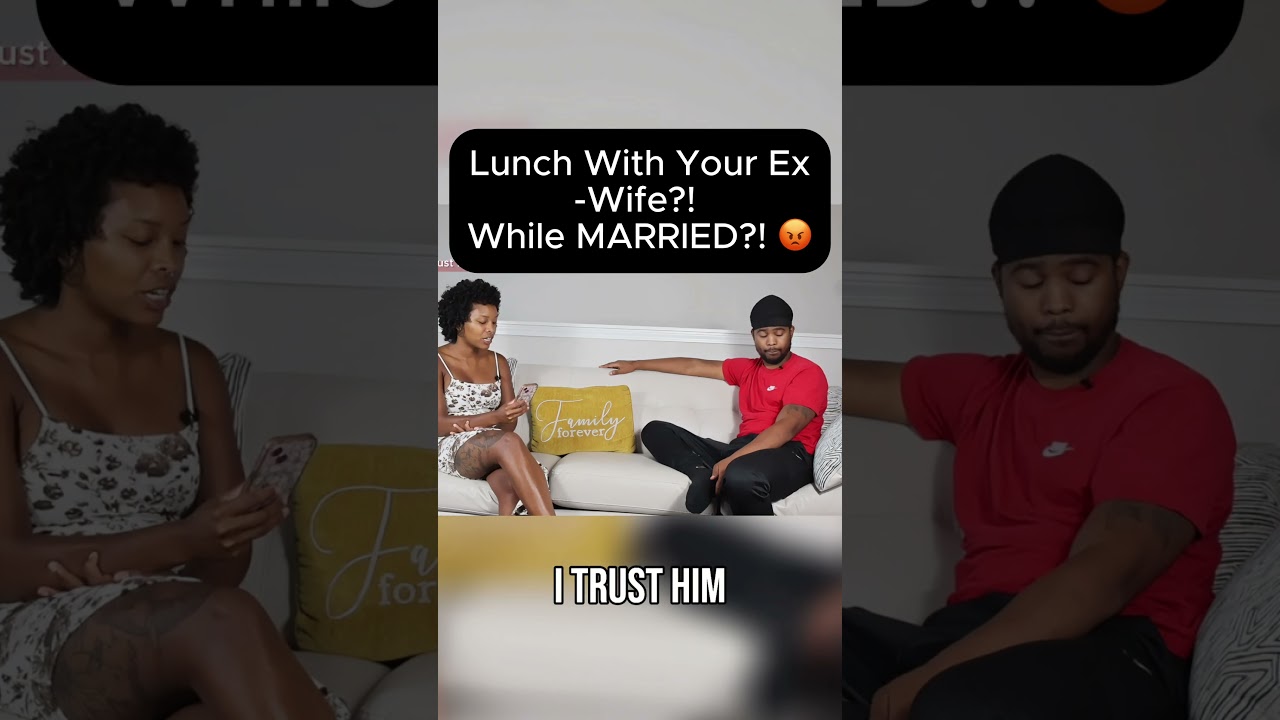
The Setup: Just a Casual Lunch, He Said
Okay, let's set the scene. This man — married, committed, supposedly aware that he shares a life with another human being — decided to meet up with his ex-wife for lunch. Not a chance run-in at a grocery store. Not a group hangout where she happened to be there. A deliberate, planned, sit-down meal. With his ex-wife. While married to someone else.
And here's the part that really gets us: he didn't think it was a big deal.
That right there is where the whole thing unravels, because the problem isn't necessarily the lunch itself — it's the complete and total absence of self-awareness around it. There's a version of this story where two mature adults who share history can grab a coffee without the world ending. We've seen it work. But that version requires transparency, mutual comfort, and — crucially — a partner who was brought into the conversation BEFORE the reservation was made. None of that appears to have happened here.
His Wife's Perspective: Not Irrational, Actually
When she found out, the tension didn't just simmer — it boiled over into a full-on confrontation. And honestly? We get it.
Here's what people who pull the 'it's just lunch' card don't seem to understand: it's never just about the meal. It's about what the meal represents. An ex-wife isn't just some person from his past — she's someone he once chose to build a life with. Someone he stood in front of people and made promises to. The history there is layered in a way that a random old coworker or college friend simply isn't.
When your current partner keeps a connection like that without looping you in, without checking in, without even acknowledging that hey, this might feel weird to you — that's not just a boundary issue. That's a respect issue. His wife's reaction wasn't jealousy spiraling out of control. It was a reasonable response to feeling like her comfort and her marriage were being treated as secondary to his desire to maintain a relationship she knew nothing about — or at least, wasn't meaningfully included in.
The fact that he 'apparently doesn't see the issue' is honestly the most telling detail in this whole story. Blind spots in relationships are dangerous not because people are malicious, but because they're invisible to the person who has them.
The Red Flags We're Clocking (And You Should Too)
Let's do a little breakdown, because this story is practically a masterclass in the kind of low-key relationship behaviors that quietly erode trust over time.
Red Flag #1: The unilateral decision. He made plans with his ex without a real conversation with his wife first. Not a 'hey, is this okay with you?' — just a decision, made, done.
Red Flag #2: The minimizing. Calling something 'innocent' before your partner has even had a chance to express how they feel about it is a shutdown move. It preemptively labels their concern as overreaction before they've opened their mouth.
Red Flag #3: The lack of transparency about the ongoing nature of this connection. The recap mentions 'these lunch meetings' — plural. Which means this wasn't a one-time thing. There was a pattern here, and his wife was apparently not in the loop on the full picture.
Red Flag #4: The framing of her reaction as the problem. When one person in a couple thinks the issue is their partner's feelings rather than their own behavior, you've got a communication breakdown that runs deep.
None of this means the marriage is doomed. But it does mean something real needs to be addressed — and 'just trust me' is not going to cut it.
What Happens When 'Innocent' Isn't the Point
Here's the thing about this story that keeps pulling at us: even if every single lunch was completely platonic — no lingering feelings, no crossed lines, nothing but two people eating sandwiches and talking about their days — it still matters that his wife is hurting. The content of the lunches almost becomes secondary to the dynamic they've created.
Because what his wife is really asking isn't 'did something happen?' She's asking, 'do I matter enough for you to consider my feelings before you act?' And right now, she's not sure of the answer.
That's the confrontation at the center of this story. And how he responds to that question — not the lunch question, but the deeper one — is what's going to determine where this marriage goes from here. We're watching closely.
Our take
Curtis and I went back and forth on this one, because on the surface, staying friendly with an ex isn't automatically a crime. People are adults. History doesn't have to equal drama. BUT — and this is a big but — the way this man handled it is what tips it into messy territory for us. No heads-up, no checking in, apparently multiple meetups, and then a total failure to understand why his wife is upset? That's not 'just lunch.' That's someone who has decided his comfort with the situation is more important than his partner's peace of mind. His wife isn't being unreasonable. She's asking to be considered. The fact that he can't see that is the real issue here — and it's one that no amount of 'but it was innocent' is going to fix.
Keeping a connection with an ex isn't automatically wrong — but keeping it hidden, minimizing your partner's feelings about it, and refusing to see their perspective? That's how 'just lunch' becomes the beginning of the end.