The Cruelest Kind of Trap: When 'Safe' Isn't Safe
There's a particular kind of devastation that only children of toxic homes understand — the mental math you do as a kid, sorting your parents into columns. The dangerous one. The safe one. The one you run from and the one you run to. It's survival logic. It makes complete sense when you're small and scared and just trying to get through. But what happens when the column you thought said 'safe' turns out to be wrong?
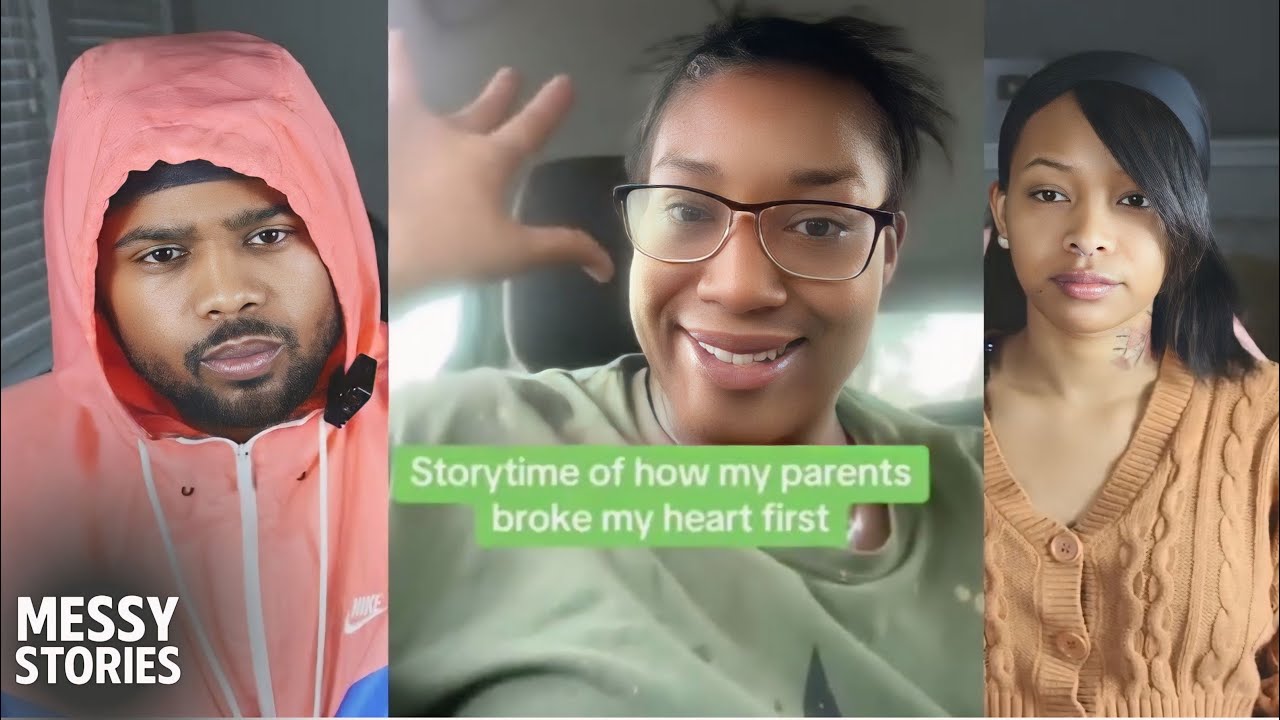
That's exactly where this woman found herself. After enduring real hardship at the hands of her father, she did what felt like the only rational thing: she sought refuge with her mother. In her mind, her mother was the alternative, the shelter, the parent who would finally see her pain and wrap around it with something resembling protection. And for a while — maybe — she let herself believe that was true.
We've heard versions of this story in our DMs more times than we can count. The mom who seemed like the 'good one' until you needed her most. The parent who wasn't overtly dangerous but whose specific brand of emotional unavailability, or selfishness, or cruelty carved out its own kind of damage. Different wounds, same source: the people who were supposed to keep you safe.
When Childhood Pain Follows You Into Your Own Home
Here's what doesn't get talked about enough: surviving a toxic parent isn't a finish line. It doesn't end when you age out of the house, when you get your own apartment, when you get married, when you have kids. The pain has legs. It walks right in behind you and sits down at your dinner table like it was invited.
For this woman, the wounds from her childhood didn't stay neatly in the past. They rippled — her words, essentially — into her marriage and into her relationship with her own children. And that's the part of this story that hits different, because she wasn't passive in any of this. She did everything she could to break the cycle. She was intentional. She tried. She built something.
And still, her mother's actions kept reaching into that life and causing damage. That's not just painful — that's a specific kind of exhausting that makes you question whether healing is even possible while the source of the wound is still active. It's like trying to recover from an injury while someone keeps poking the bruise. You can do all the right things and still find yourself back in that same raw, aching place.
What makes her mother's betrayal sting in a way her father's almost doesn't — and we say 'almost' carefully — is the expectation. She expected her father to hurt her. She did not expect her mother to. That gap between expectation and reality is where the deepest wounds live.
The Red Flags We Recognize in Hindsight (And What They Actually Mean)
Looking at this story, a few patterns emerge that we think are worth naming — not to assign blame to her for missing them, but because recognizing them might help someone reading this right now.
First: a parent who positions themselves as 'the good one' in contrast to the other parent is worth watching closely. Healthy parents don't need that comparison to justify their love. They just love you. When a parent's identity is built around being better than your other parent, their support can come with invisible conditions — and when you stop needing them to be the hero, the dynamic can shift in ugly ways.
Second: the pain showing up in her marriage and with her own children tells us this wasn't a minor friction situation. This was sustained. This was repeated. This was a mother who had multiple opportunities to choose her daughter and kept not choosing her.
Third — and this is the one that gets us — she kept trying. She kept going back, kept hoping, kept doing the work of the relationship. That's not weakness. That's love. But it's also the thing that makes the repeated hurt so compounding. Every time you try again and get hurt again, you're not just absorbing a new wound, you're also grieving the version of the relationship you keep hoping for.
The question her story raises — whether distance or full separation is the only real path to healing — is one we don't think has a universal answer. But we do think there's something clarifying about asking: is this relationship costing more than it's giving? And is the answer the same every single time you ask it?
Should She Cut Both Parents Off? Here's Where We Land.
We're not going to sit here and tell you what the right answer is for her specifically, because we don't know every detail, and frankly, neither does anyone who wasn't living inside her life. But we will say this: the framing of 'should she cut them off' sometimes misses the more important question, which is — what does she actually need to feel safe and whole?
For some people, distance is the answer. For others, it's a very firm and enforced boundary that changes the terms of the relationship entirely. For others still, it's grief — grieving the parents they deserved and never got — and finding a way to carry that without letting it keep steering the car.
What we do know is that she already proved something enormous about herself: she survived. She built a life. She tried to protect her own children from the cycle. That's not nothing. That's actually everything. And whatever she decides about her parents, we hope she knows that the work she's already done — the intentionality, the effort, the love she tried to give even when it wasn't returned — that belongs to her. Nobody can take that back.
Our take
Curtis and I talked about this one for a while after we read it, because it hit close to home for both of us in different ways. There's something about the second betrayal — the one from the parent you thought was safe — that almost breaks you differently than the first. You're not just hurt, you're disoriented. Your whole map of who was dangerous and who wasn't turns out to be wrong, and now what? What we keep coming back to is this: she did everything right. She stayed out of trouble, she tried to build something good, she protected her kids. The system failed her, not the other way around. And we think the MessyFam needs to hear that clearly, because sometimes we absorb our parents' failures as our own shame. Not here. Not this one. We're rooting for her hard.
Some people don't get a safe parent — they have to become one, for themselves and for their own kids. And the fact that she's still asking how to heal means she hasn't given up on herself, which is the most important thing of all.