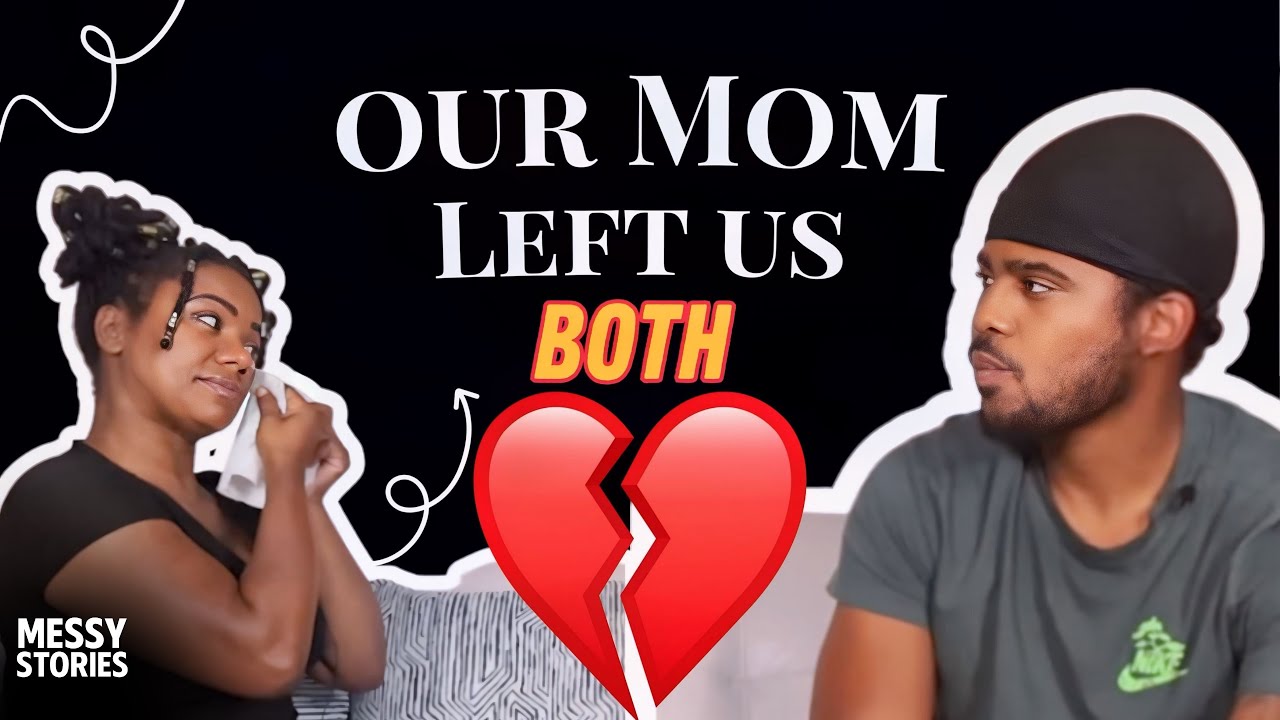
The Wound That Belongs to Both of Them
There's a specific kind of pain that comes from a parent walking away — and it doesn't get softer just because someone else shares it with you. If anything, it gets more complicated. Because now there are two people trying to make sense of the same senseless thing, and they're doing it from inside the same scar tissue, just different nerve endings.
That's exactly where we find ourselves with this story. Two siblings, one mother, one abandonment. She didn't leave one of them behind and stay for the other — she walked away from both. And yet, years later, when they finally sit down to talk it out honestly, they are not in the same place at all. One has moved toward forgiveness. One still can't get there. And neither of them is wrong.
We want to say that louder for the people in the back: neither of them is wrong. That's what makes this conversation so hard to watch and so impossible to look away from.
What Forgiveness Actually Means (And Why It's Not One-Size-Fits-All)
Here's the thing about forgiveness that nobody tells you when you're growing up: it is not a finish line. It's not a box you check. It's not even something you do once and then it's done. For some people, forgiveness is a slow, deliberate choice they make over and over again — a way of refusing to let old pain run their present life. For others, forgiveness feels less like freedom and more like betrayal. Like you'd be letting someone off the hook for something they never even acknowledged doing.
The sibling who has moved toward reconciliation isn't naive. They're not saying what happened was okay. They're saying they've found a way to carry it that doesn't crush them anymore. That is real, hard, earned work. We have to respect it.
But the sibling who still can't forgive? That anger isn't weakness either. That's a person who is still being honest about what the abandonment cost them. There's something almost protective about that kind of anger — it's a boundary, a record, a refusal to pretend the damage wasn't real. The danger, of course, is when that protection starts to become a prison. When the resentment takes up so much space that it starts crowding out the present.
The question this conversation is really wrestling with — the one that hits us right in the chest — is whether healing actually requires forgiveness, or whether healing and forgiveness are just two separate roads that sometimes run parallel and sometimes don't meet at all.
The Sibling Relationship Caught in the Middle
What we find genuinely gutting about this story is that the mother's abandonment created a second layer of potential loss that she probably never even thought about: the risk that her two kids, bound together by the same trauma, could end up divided by how they've each chosen to survive it.
Think about that for a second. You lose your mom. And then, years later, you sit across from the one person who truly understands what that loss felt like — your sibling, your co-survivor — and you realize you've been grieving in completely opposite directions. That's a lonely realization. It can feel like a second abandonment, even when nobody means it that way.
The sibling who has forgiven might feel frustrated, like they're being held back or like their healing is being judged. The sibling who hasn't might feel pressured, like they're supposed to perform a peace they don't genuinely feel yet. Both of those dynamics are real, and both of them can quietly damage a relationship if they're not named out loud.
The fact that these two are sitting down and having this conversation at all — raw, uncomfortable, no clean resolution in sight — is honestly the most hopeful thing about this whole story. They're still showing up for each other. They're still trying to understand. That matters enormously.
Our take
Okay, we talked about this one for a long time after we watched it, because we genuinely did not agree at first — which, honestly, felt very on theme. Curtis leaned toward the sibling who can't forgive, because he thinks there's something important about not rushing yourself into a peace that isn't real yet. Honade felt more aligned with the one who chose reconciliation, because she's seen what long-term resentment can do to a person from the inside out. And here's where we landed together: the bravest thing in this whole story isn't the forgiveness. It's the conversation itself. Two people sitting in the same old pain and refusing to let it make them strangers to each other. That's the thing worth protecting. Mom already took enough.
Forgiveness is personal, it's nonlinear, and it doesn't have a deadline — but the relationship you have with the people who survived alongside you? That one's worth fighting to keep.