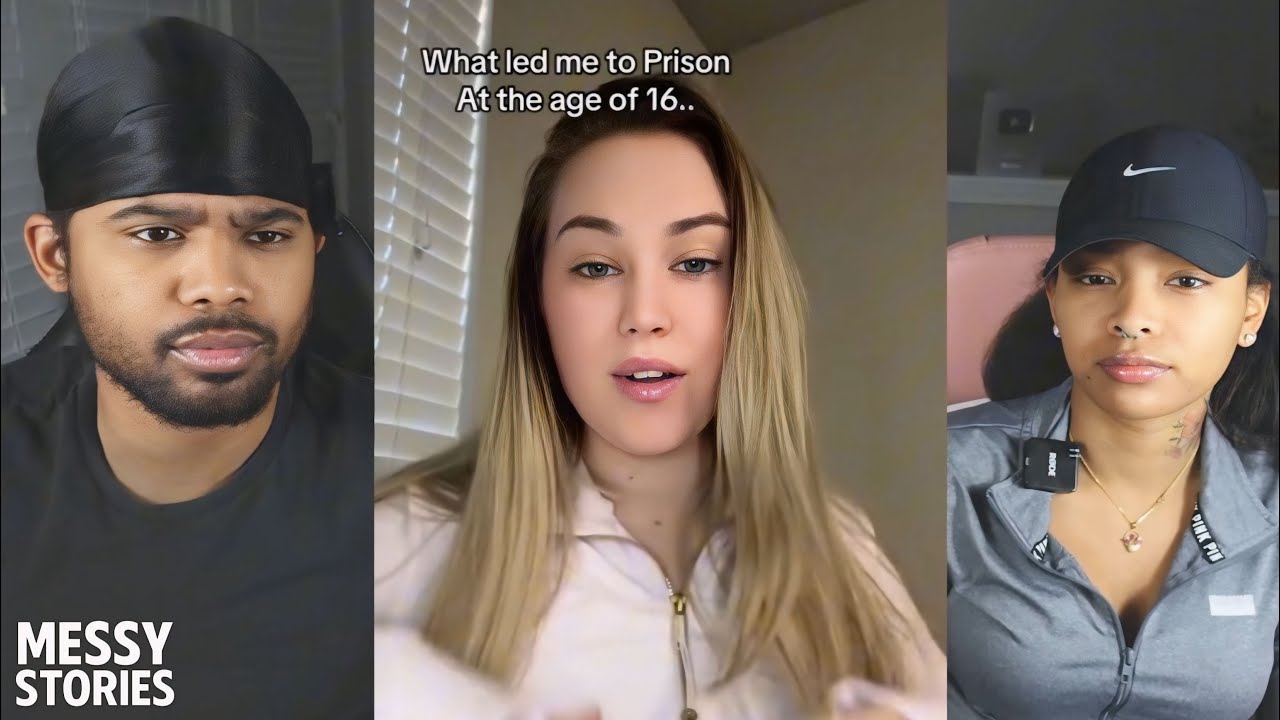
The Promise She Made Before She Was Ready to Talk
There's a specific kind of strength that only grief can build — the kind where you're still crying in the car but you show up anyway, because someone has to. That's the energy this grandmother is carrying into every second of this story. Before her son passed away, he was deep in it: a complicated situation with his child's mother that had already turned dangerous and was spiraling into legal territory. He didn't get to see it through. So she made a promise — to herself, to his memory, to anyone who would listen — that she would tell the whole truth about what happened. And MessyFam, she kept that promise.
What makes this story hit different from the jump is that she's not just a scorned grandmother venting. She's a grieving mother who watched her son navigate something genuinely scary, and now she's the one left holding the thread. She could have gone quiet. She could have let the story die with him. Instead, she went on camera and started talking. That alone tells you everything about who this woman is.
A Dangerous Situation, Court Papers, and a Custody Battle No One Asked For
Here's what we know about the actual conflict, and it's a lot: before her son died, the situation with his child's mother had escalated to something dangerous — not just emotionally messy, but the kind of dangerous that makes people call lawyers and document everything. From that dangerous incident, things moved fast into formal legal territory. Court papers. Custody threats. The whole machinery of the family court system grinding into motion around a child who had no say in any of it.
Now, we've seen enough of these stories to know that 'baby mama drama' is a phrase that gets thrown around way too casually. Sometimes it really is just drama. But sometimes — like here — it's a shorthand for a power struggle over a child's entire identity and sense of belonging. When one parent dies, that struggle doesn't pause out of respect. If anything, it can intensify, because suddenly there's a vacuum where that parent used to be, and whoever fills it gets to shape the narrative. This grandmother clearly understood that. She wasn't just fighting for visitation or holiday schedules. She was fighting for her grandson's right to know where he came from — to know his father existed, mattered, and loved him.
The fact that this escalated to formal custody proceedings tells us the other side wasn't backing down quietly either. This wasn't a situation that was going to resolve itself over a polite conversation. Someone was willing to go to court. Someone was willing to make it official. And a child was sitting in the middle of all of it.
What It Actually Means to 'Fight for' a Grandchild
We want to sit with this for a second, because 'fighting for her grandson' sounds heroic in a headline but it's genuinely brutal in real life. Grandparent rights are notoriously complicated in most places — in many situations, a surviving parent has enormous legal power to limit or completely cut off access from the deceased parent's family. It doesn't matter how loving the grandparent is. It doesn't matter how close the child was to that side of the family. The law often doesn't protect those bonds the way our hearts think it should.
So when this grandmother stepped into the arena, she likely knew she wasn't holding the strongest legal hand. What she had instead was documentation of the history, a story that needed to be told, and the kind of stubborn love that doesn't know how to quit. She also had something that courts and custody agreements can't fully quantify: the living memory of her son. She is, at this point, one of the primary keepers of who he was. Every story she tells her grandson, every photo she shares, every 'your daddy used to do that too' — that's not small. That's legacy work. That's the real fight.
Red flag worth naming: when a dangerous incident is the inciting event for a custody dispute, and that incident is serious enough to end up in court, it's worth asking hard questions about the environment a child is being raised in. This grandmother clearly had those questions. She wasn't just grieving — she was paying attention.
Our take
Curtis and I were genuinely quiet after watching this one, which almost never happens. We talk through everything, but this one made us both just... sit. Because the thing that gets us isn't even the custody battle or the legal drama — it's the image of a woman who just lost her child, who is still actively in grief, and who has to simultaneously armor up and fight for the one piece of her son that's still here. That's not a storyline. That's a person doing the hardest thing imaginable twice over. We don't know how this ends. We don't know what the court decided or where things stand now. But we know she showed up, she told the truth, and she refused to let her grandson be cut off from his father's memory. In our book? That's already a win, whatever the paperwork says.
Some fights aren't about winning — they're about making sure a child grows up knowing they were worth fighting for. This grandmother understood that from the very beginning.