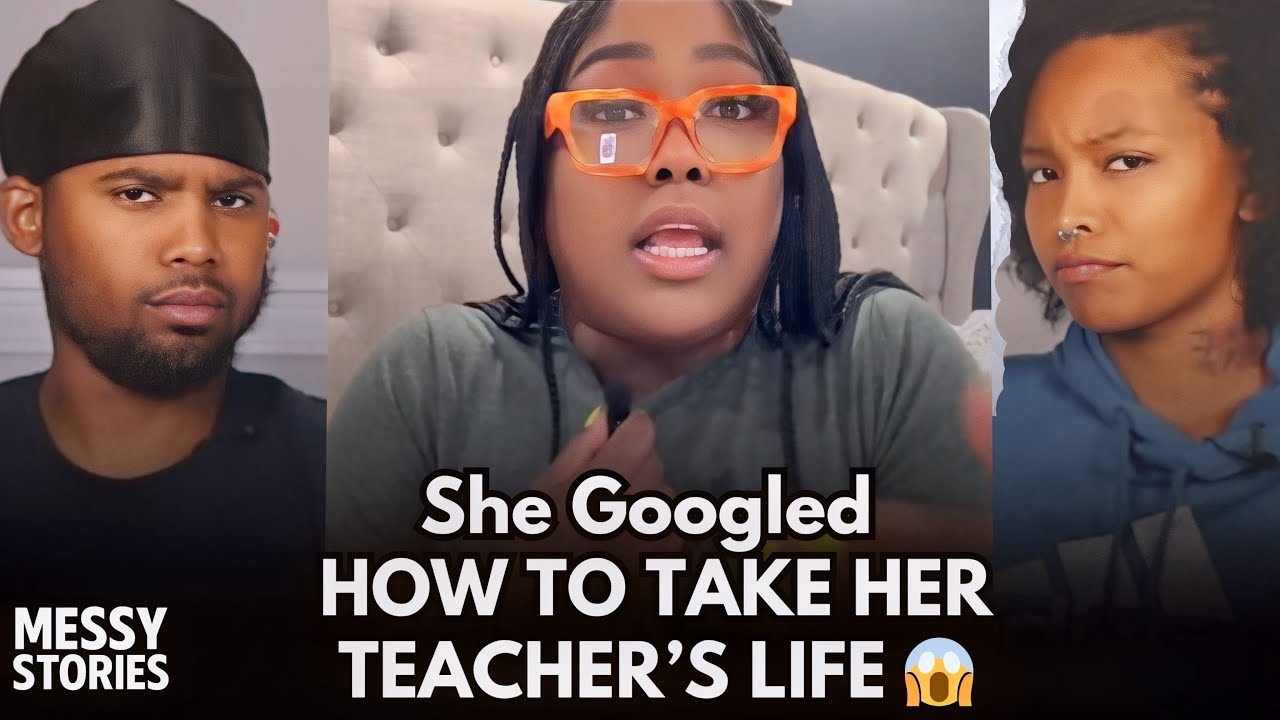
The Search That Stopped Everything
Imagine you're standing at the front of your classroom doing what you do every day — managing chaos, explaining concepts, trying to reach kids who may or may not want to be reached — and somewhere in that room, one of your students is Googling how to end your life. Not venting in a journal. Not whispering to a friend. Actively searching. On a school device. In your presence.
That is exactly what happened to this teacher, whose story was shared on TikTok by @shaniqadamss and has since rattled every educator and parent who's come across it. The moment she discovered what that student had searched wasn't just alarming — it was the kind of thing that splits your sense of safety clean in half. Before that moment, and after it. Because once you know a student has looked up how to take your life, you can't un-know it. You walk back into that classroom carrying that information in your chest like a stone.
What makes this story hit so differently than a generic 'school safety' headline is the intimacy of it. This wasn't a threat scrawled on a bathroom wall. It happened in the room. During class. The student was close enough to hand in an assignment.
When the System Gets Involved — And Falls Apart
Here's where most people assume the story gets better: school finds out, school acts, teacher gets protected, student gets help. That's the version we want to believe in. That's not what happened here.
According to the account shared, the discovery of that search triggered a chain of subsequent incidents — each one more disturbing than the last — and what became increasingly clear was that the institutions designed to handle exactly this kind of situation were not equipped to do so. The teacher didn't just face one frightening moment. She faced a series of them. And at each turn, she found herself confronting the gaps: gaps in protocol, gaps in communication, gaps in genuine accountability.
Schools exist in this impossible tension when it comes to threats. There's student privacy law on one side, staff safety on the other, and somewhere in the middle is an administrator who may be undertrained, under-resourced, or simply unwilling to escalate something that might bring scrutiny to their building. Teachers often describe feeling like they're expected to absorb the risk quietly — to keep showing up, keep the classroom running, keep the numbers looking good — while the system figures out what to do. Or doesn't.
This teacher's experience, by her own account, felt like a systemic failure at multiple levels. Not one person dropping the ball, but the whole structure revealing the cracks it had been hiding.
The Bigger Question Nobody Wants to Answer
The YouTube description for this story says it will make every parent and teacher 'rethink how much privacy kids should really have' — and that framing is worth sitting with, because it's genuinely complicated. We're not here to demonize a child. Kids in crisis do frightening things, and what they often need most is intervention, not punishment. But here's the tension: when a minor's privacy is protected to the point that the adult they've targeted has no real recourse, something has gone deeply wrong in how we've balanced those values.
Teachers are asked to build relationships with students, to be patient and present and emotionally available — and then when something like this happens, they're often the last ones to receive real information about what's being done. They find out less than the parents. Less than the counselors. They're kept at arm's length from the very process that's supposed to make them safe enough to return to work.
What this story surfaces is a question that school boards and legislators and parents all need to be sitting with: what does genuine protection for educators actually look like? Not liability-covering protection. Not 'we documented the incident' protection. Real, functional, you-can-walk-back-into-that-building-without-fear protection. Because right now, a lot of teachers are walking back in anyway — not because they feel safe, but because they feel like they have no other choice.
Our take
We've talked about a lot of messy situations on this site, but this one genuinely unsettled us in a different way. Because this isn't about a bad relationship or a family blowup — this is someone going to work and finding out the room they're standing in might not be safe. And then being handed a system that shrugs. Curtis keeps coming back to the part where the incidents kept unfolding after the initial discovery — like, it wasn't one bad day, it was a whole unraveling. And Honade is stuck on the fact that this teacher is still out here telling the story, which means she survived it, but also that she felt the need to tell it publicly because the official channels clearly weren't enough. That part says everything. We're watching this one closely. Go follow @shaniqadamss and hear it directly from her.
A Google search in the middle of class shouldn't have to become a viral TikTok for anyone to take a teacher's safety seriously — but here we are, and this story isn't done unfolding.