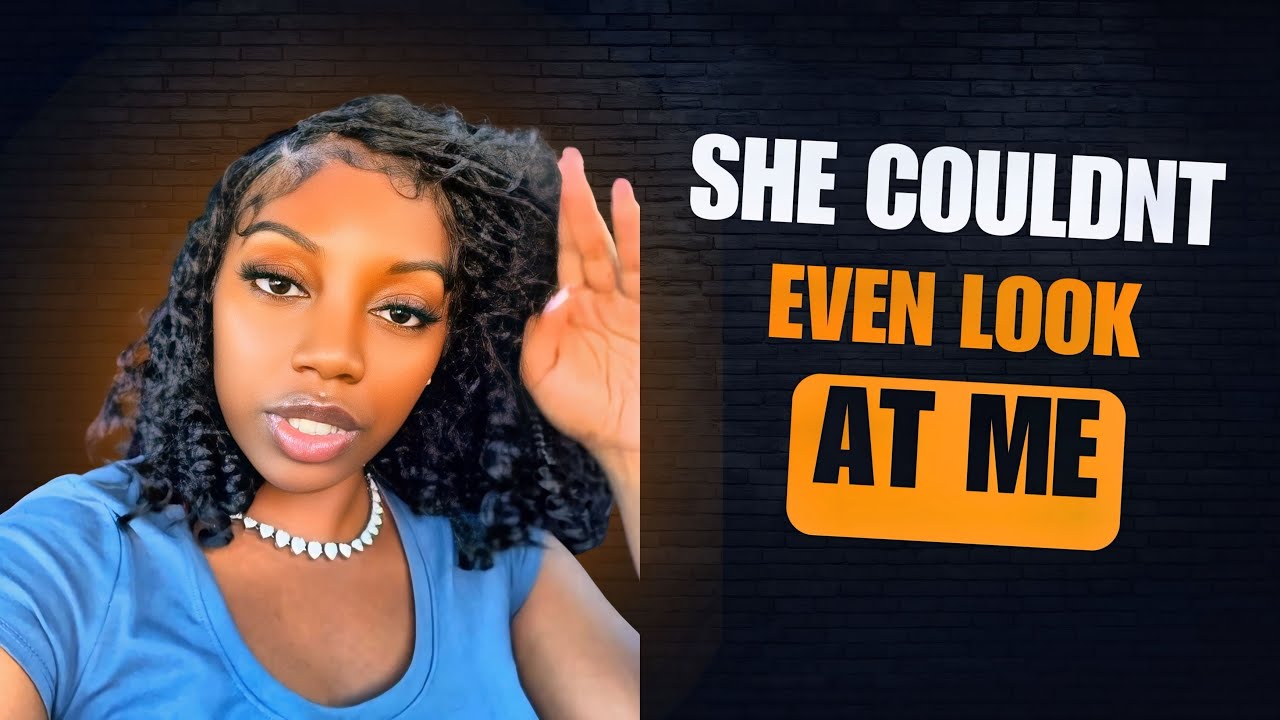
Seven Hours Is a Long Time to Pretend Nothing Happened
Let's set the scene, because the logistics alone are sending us. You book a hair appointment — a long one, seven hours, the kind where you're fully at someone's mercy — and the person holding the flat iron is the exact same person who ghosted your birthday dinner without a single word of explanation. No call. No text. No 'something came up.' Just... absence. And now here you both are, inches apart, for the better part of a workday.
We need you to really sit in that. Seven hours is not a quick trim. Seven hours is a full emotional endurance test. That's a transatlantic flight. That's a season of a prestige drama. That's enough time to rehearse every version of the conversation you want to have, talk yourself out of it, rehearse it again, and then stare at your own reflection wondering why you're like this. We feel that in our bones.
What makes it especially wild is that neither of them broke. The hairstylist — who, let's be honest, knew exactly what she did — said nothing. Not an 'I'm so sorry I missed it,' not a casual 'hey, about your birthday,' not even a vague 'things have been crazy lately' opener to test the waters. Complete radio silence on the subject. And the client? She matched that energy. Chose not to confront her. Just sat there, letting the tension do its thing. We're not judging that choice at all — sometimes silence is its own kind of statement.
The Text That Arrived After Was Actually Worse
Here's where the story shifts from uncomfortable to genuinely revealing. The appointment ends. Everyone survives. And then — the text arrives. Now, if you've been holding your breath hoping for a genuine apology, a moment of accountability, some acknowledgment that yes, missing a friend's birthday without a word is not great behavior... you're going to be disappointed.
Instead of owning it, the hairstylist flipped the script entirely and positioned herself as the victim. We don't know the exact wording, but we know the move — and we've all seen it. It's the conversational equivalent of someone stepping on your foot and then crying about their shoe. It's a deflection dressed up as feelings. And the reason it stings so much isn't just the audacity of it — it's the timing. She had seven hours in that chair to say something real. She chose silence. Then the second she was out of the room, out came the text designed to reframe the whole thing in her favor. That's not an accident. That's a strategy.
The silence wasn't awkwardness. It was calculation. She knew what she did, she knew she didn't want to answer for it face to face, and she waited until she had the safety of a screen to try to spin it. That tells you everything about where her head was — and honestly, everything about the friendship.
The Friend Who Actually Got It Right
Here's the part of this story we keep coming back to, because it reframes everything. There was another friend who also didn't show up to the same birthday dinner. Same situation. Same transgression. And that friend handled it completely differently — she owned it. She apologized. She took responsibility without making it about herself.
Same mistake. Completely different response. And that contrast is doing so much heavy lifting here.
Because when you put those two reactions side by side, it stops being about a missed birthday and starts being about character. One person saw a moment where they'd fallen short and stepped up. The other saw the same moment and decided her comfort mattered more than her friend's feelings. The friend who apologized probably saved that relationship. The one who played victim almost certainly damaged it beyond easy repair.
This is the part we always try to remind ourselves when we're in the thick of a friendship conflict: the rupture isn't always the real problem. How someone handles the rupture — that's the data. That's who they actually are. Anyone can be a great friend when everything is easy. It's the moments of friction that show you what you're really working with.
And the YouTube description said something that we think is genuinely worth sitting with: some people aren't your friends. They just enjoy the access to you. That hit different. Because access looks like friendship from the outside. It has all the same surface features — the hangouts, the inside jokes, the appointments. But it's missing the one thing that makes friendship real: the willingness to show up for someone even when it costs you something.
Our take
Curtis and I went back and forth on this one. Curtis thinks the client was completely right to stay silent in the chair — why give someone the satisfaction of a confrontation they weren't even brave enough to initiate? And honestly, fair point. But the part that got me was the text afterward. Because that text wasn't an accident or a nervous stumble — it was a move. She waited until she had distance and a keyboard and then tried to rewrite the whole thing. That's not someone who forgot to apologize. That's someone who decided she didn't owe one. The friend who actually said sorry? That's the one worth keeping. The one who played victim after seven hours of silence? That friendship has a shelf life, and it's probably already expired. We just hope the client's hair looked incredible, because she earned it.
How someone handles being wrong tells you more about them than how they act when everything is fine — pay attention to the repair, not just the rupture.