The Part That Always Gets Us: It Felt So Real
Here's the thing about lovebombing that nobody tells you until it's too late — it doesn't feel like manipulation when you're inside it. It feels like finally. Like someone who actually sees you, who shows up fully, who makes you feel chosen in a way that previous relationships never did. That intensity doesn't register as a red flag in the moment. It registers as chemistry. As connection. As the thing you've been waiting for.
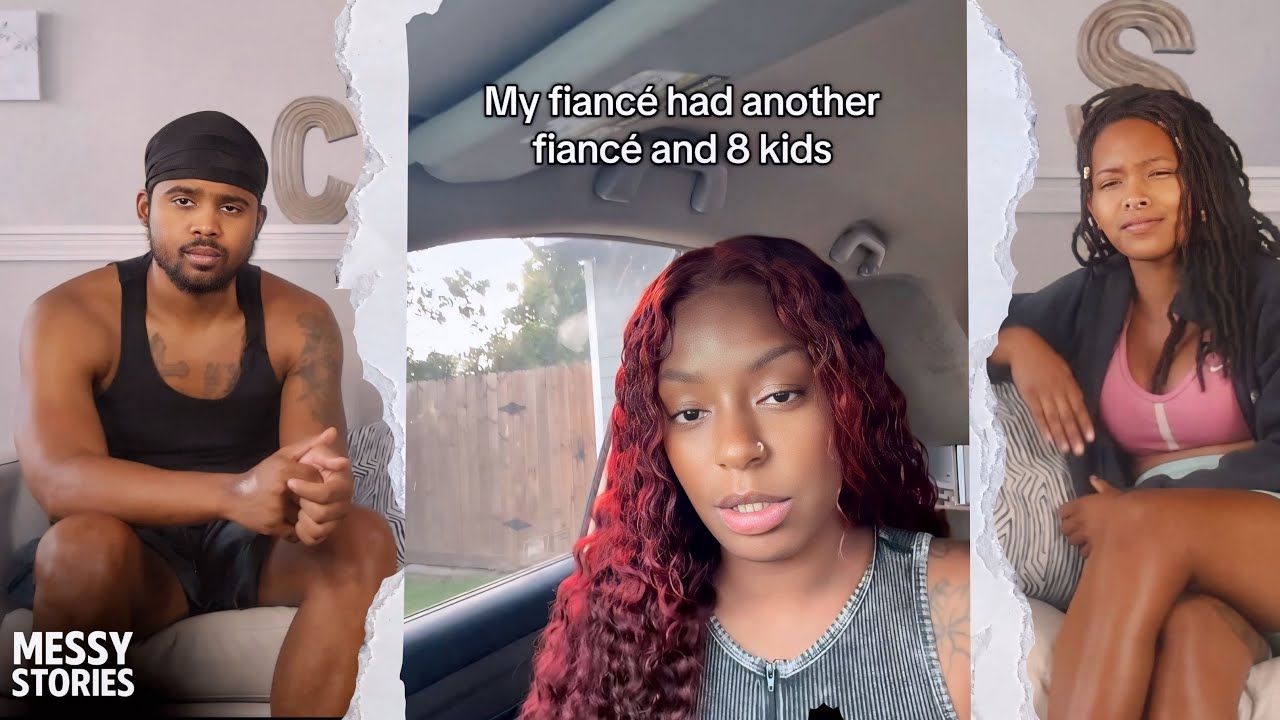
That's exactly where this story starts. A woman steps into what she genuinely believes is a real relationship — someone pursuing her with intention, with affection, with all the hallmarks of a person who is serious about her. And for a while, it works. She lowers her guard because she's been given every reason to. The attention is consistent. The energy is high. The whole thing feels electric.
We've said it before and we'll say it again: lovebombing is effective precisely because it mimics the early stages of a healthy relationship. The difference is in the motive. Real affection builds over time. Lovebombing is a strategy — and the endgame was never actually her.
Then the Cracks Start Showing (They Always Do)
What makes this story so viscerally uncomfortable is how familiar the spiral feels. It never happens all at once. There's no single moment where everything falls apart cleanly. Instead, it's a slow accumulation — a story that doesn't quite add up, a gap in availability that gets explained away, a feeling in your gut that you talk yourself out of because you don't want to be 'that person' who can't just trust.
And then the revelations start. One thing leads to another, and suddenly she's not just dealing with a lie — she's dealing with a double life. A whole separate existence that was running parallel to everything she thought she knew about this person. The version of him she trusted? Constructed. The intimacy she thought they had? Weaponized. The access she gave him — emotional, personal, real — used as material to maintain a performance.
This is the part that leaves people feeling genuinely destabilized, and it's not dramatic to say so. It's not just heartbreak. It's a rewrite. Every memory gets re-examined. Every conversation gets re-translated. You don't just lose the relationship — you lose your confidence in your own perception of reality. That's a specific kind of damage, and it takes a specific kind of time to recover from.
The Red Flags We Can Name in Hindsight (And Why That's Not Her Fault)
Let's do what we always do and break down the pattern, because naming it matters — not to assign blame to her, but because recognizing this playbook is the whole point.
Lovebombing as an opener is flag number one. When affection arrives at full volume before trust has actually been built, that's worth pausing on. Real intimacy is earned incrementally. When someone skips that process, ask yourself: why the rush? Who benefits from you being deeply attached before you actually know them?
Secrecy dressed up as privacy is flag number two. There's a difference between someone who has healthy boundaries around their personal life and someone who is actively managing what you're allowed to see. The double life in this story didn't appear out of nowhere — it was maintained through careful information control.
The escalating revelations are flag number three, and honestly the most disorienting one. When the lies keep compounding — when each new truth you uncover is worse than the last — that's not a series of mistakes. That's architecture. Someone built this. They made choices, repeatedly, to keep it standing.
None of this means she should have seen it coming. Manipulative people are, by definition, skilled at manipulation. That's not a character flaw in the person being deceived. That's just the nature of the thing.
The Question That Lingers When the Dust Settles
What haunts us most about stories like this one isn't the betrayal itself — it's the unanswered 'why.' And the recap for this story names it directly: even after everything surfaces, even after the full scope of the deception becomes clear, the true motivation behind all of it remains an open question.
That ambiguity is its own kind of cruelty. Because we're wired to want narrative sense. We want the story to close. We want to understand what we were to someone, even if the answer is painful. But some people operate from places so disconnected from genuine feeling that the 'why' may never be satisfying — because there was no grand plan, no deep wound driving it, no reason that would ever feel like enough.
What she's left navigating — and what anyone who's been through something like this knows — is how to rebuild trust in your own instincts. How to stay open without becoming armored. How to let the next real thing feel real without the shadow of this one making you doubt everything.
That's the actual work. And it's harder than any single revelation.
Our take
Curtis and I watched this one back to back and just sat with it for a minute after. The lovebombing-to-double-life pipeline is one of the most documented patterns in toxic relationship dynamics, and it still manages to be shocking every single time because of how human and understandable the entry point is. You don't fall for a liar — you fall for the version of themselves they showed you, which felt completely real. That distinction matters. What gets us is the compound nature of the deception here — it wasn't one bad choice, it was a sustained performance. And she had to not only absorb the betrayal but reconstruct her entire understanding of the relationship from the ground up. That's enormous. We're rooting for her clarity, her healing, and honestly? Her next chapter being absolutely unbothered.
Lovebombing isn't love — it's a setup, and the intensity that feels like chemistry is often just the sound of someone moving fast before you can see clearly. The real flex is learning to want the slow build.