When a Breakup Stops Being Just a Breakup
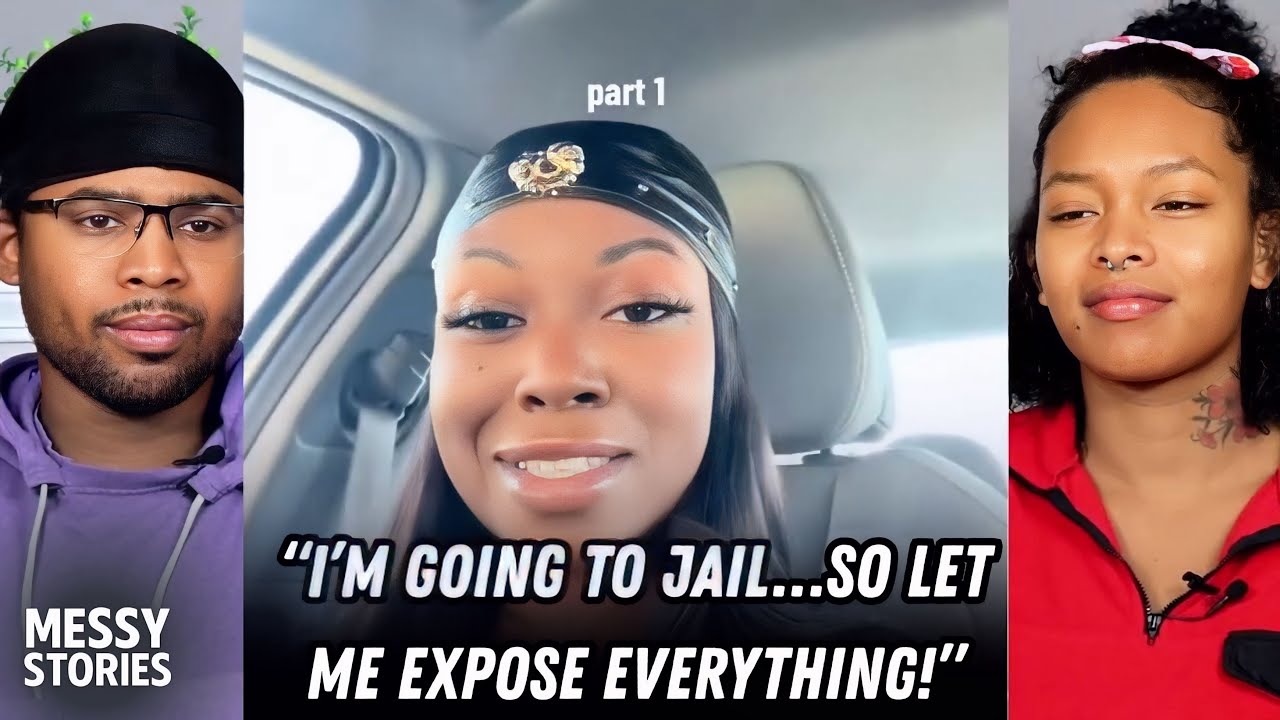
Some breakups end with a blocked number and a sad playlist. This one ends with police lights in the driveway and someone deciding that if they're going down anyway, they're taking everybody with them. That's the energy of the title — "Since I'm Going to Jail, I'm Exposing It All" — and honestly, it tells you exactly what kind of night you're walking into.
What we love (and dread) about a story like this is that there's no clean villain handed to you on a plate. It's a split between two people that didn't stay between two people. It metastasized. Deception, jealousy, accusations flying both directions — and each person convinced they're the one who got wronged. Nobody in this story thinks they're the bad guy. That's almost always the tell that we're about to spend twenty minutes untangling a knot that the people inside it can't see straight.
Two Stories, Both Holding Receipts
Here's where it gets genuinely hard. Both sides show up armed. Screenshots, timelines, their own airtight version of how the night went down — receipts, as the kids say. And when both people have evidence, your brain wants to believe whoever is more confident or whoever cried more convincingly. That instinct will betray you every single time.
The trouble with receipts is they only show you the frame somebody chose to keep. A screenshot can be real and still be missing the three texts that came before it. A clip can be true and still be the second half of a fight that started somewhere uglier. We've watched enough of these to know: contradictions aren't always lies. Sometimes two people genuinely remember the same night completely differently because they were each only feeling their own side of it.
So we sat with the discomfort. Instead of asking "who's telling the truth," we kept asking "what would have to be true for both of these accounts to make sense?" That's a less satisfying question. It's also usually the right one.
When the Family Gets Dragged Into the Ring
The moment that escalates a personal dispute into a full-blown saga is when the families get pulled in. And in this one, they absolutely do. Relatives become entangled in the drama, take sides, add their own accusations to the pile — and suddenly it isn't two people fighting, it's two camps.
Family involvement is a double-edged thing. On one hand, your people showing up for you is love. On the other, family members tend to know only your half of the story, and they defend that half like it's gospel. They weren't in the relationship. They didn't see the small, quiet betrayals that don't make it into the group chat. They just see their person hurting and somebody to blame for it.
That's how a breakup turns into a night that needs law enforcement to sort out. Everybody's loyalty is real, and everybody's information is partial, and those two things together are a powder keg.
Red Flags and What Actually Stood Out to Us
A few things made us sit up. First, the phrase "exposing it all" — because exposure as revenge is a choice. When someone reframes consequences as a chance to detonate everything, the goal stops being justice and starts being damage. That reframe is worth noticing.
Second, the symmetry of the accusations. When both people claim victimhood with equal force and equal evidence, that doesn't mean the truth is automatically in the middle — but it does mean you can't take either narrative at face value. Real victims and skilled manipulators can sound identical for the first ten minutes.
Third, the jealousy thread running underneath all of it. Jealousy that escalates to police involvement usually didn't appear overnight. There were almost certainly earlier, smaller versions of this same fight that nobody intervened in.
The questions we kept wrestling with: At what point should someone have walked away? Who made the choice that turned a bad night into a legal one? And — the one nobody wants to answer — what would we have done at the moment it tipped? You can watch the full play-by-play unfold in the video and decide whose account survives the scrutiny.
Our take
Our take: this is the kind of story where the loudest, most confident narrator is the one we trust the least. Both sides came with receipts, both sides claim victim status, and both sides recruited their families into a war that ended with police lights. That symmetry is exactly why we refuse to crown a clean winner from the recap alone. What stands out to us isn't who cheated or who lied first — it's the moment somebody decided that since the night was already ruined, they'd burn it all down on the way out. That choice — \"exposing it all\" as revenge — tells us more about character than any screenshot does. We're not saying nobody here is genuinely hurt. People can be wronged and still handle it terribly. We just think the real answer lives in the order of events, not the volume of the accusations. Watch it, then tell us: who tipped this over the edge?
When everyone in a story is holding receipts and claiming to be the victim, the truth usually isn't in who shouts loudest — it's in who made the choice that turned a bad night into a permanent one.