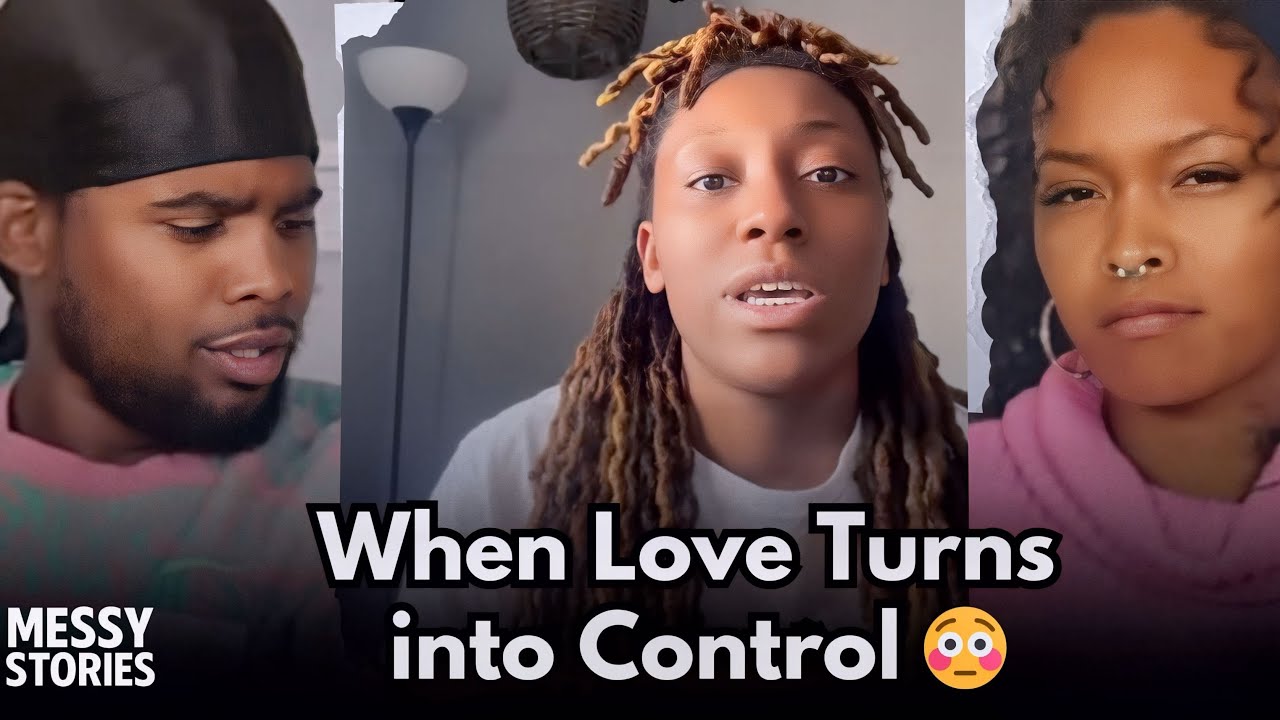
The Slow Burn Nobody Sees Coming
Here's the thing about control in relationships that nobody warns you about: it almost never announces itself. It doesn't show up on day one wearing a name tag. It creeps in wearing the costume of love — the 'I just worry about you,' the 'I only said that because I care,' the apology that somehow ends with you feeling worse than before you got it. That's exactly the kind of story we're sitting with today, and MessyFam, it is a lot.
What starts here as a genuine connection — real feelings, real warmth — gradually shifts into something neither person fully recognizes anymore. The emotions change shape. The words get twisted in transit, like something gets lost between what one person means and what the other person hears. And before long, the whole relationship is operating on a frequency of low-grade tension that never fully resolves, just pauses between episodes. Sound familiar? Because honestly, we've heard some version of this from too many of you in our DMs.
The Apology That Raises More Questions Than It Answers
One of the most specific and gutting details in this story is the way apologies function — or rather, fail to function. Every time there's a rupture, an apology follows. That sounds healthy on paper. That's what we're supposed to do, right? Acknowledge the hurt, say sorry, move forward. Except here, every apology somehow generates new doubts instead of clearing the air. And that pattern? That's not a communication problem. That's a symptom.
When apologies consistently leave the other person more unsettled, it usually means one of a few things is happening: the apology isn't actually addressing the real issue, there's a pattern of behavior that keeps repeating so the words have lost their weight, or — and this one is hard to sit with — someone is apologizing strategically rather than genuinely. We're not saying that's what's happening here, because this story is careful to resist easy villain-casting. But we are saying that if you're in a relationship where 'I'm sorry' has started to feel like a trap door rather than a bridge, that's worth paying attention to.
When Nobody's the Villain and That Makes It Worse
This is the part that makes this story genuinely complex and, honestly, more realistic than most relationship content out there. There's no clear bad guy. Both people are caught in a dynamic that has grown beyond what either of them signed up for, and both are contributing to something that has become suffocating without either necessarily intending it to be.
That's actually harder to process than a clean betrayal. When someone cheats or lies outright, there's a defined moment of rupture — a before and after. But when two people slowly build a cage together out of love and fear and miscommunication and unmet needs? The exits aren't labeled. You can't point to the day it went wrong because it went wrong on a hundred ordinary Tuesdays.
The line between care and control blurs completely here, and that's the most dangerous kind of blur. Checking in becomes monitoring. Concern becomes interrogation. Wanting closeness becomes not allowing space. Neither person wakes up one morning and decides to be controlling or controlled — they just keep responding to each other in ways that tighten the knot, one small pull at a time. What finally forces a moment of clarity? That's exactly what unfolds as this story plays out — and we are watching every second of it.
Our take
Curtis and I kept pausing this one to look at each other because we've seen pieces of this dynamic in stories people have shared with us, and it hits differently when there's no easy person to point at. The absence of a villain doesn't make it less damaging — if anything, it makes it harder to leave, harder to name, harder to heal from. What strikes us most is how the apology cycle becomes its own form of control, keeping both people locked in a loop that feels like progress but isn't going anywhere. The most honest thing this story does is refuse to let either person fully off the hook, and that's rare. Real love shouldn't feel like a question you can't stop asking yourself. If peace only ever comes in short windows before the tension rebuilds, that's not a rough patch. That's the relationship.
Control doesn't always look like a fist — sometimes it looks like an apology that leaves you more confused than before. When you can't tell where care ends and control begins, that confusion itself is the answer.