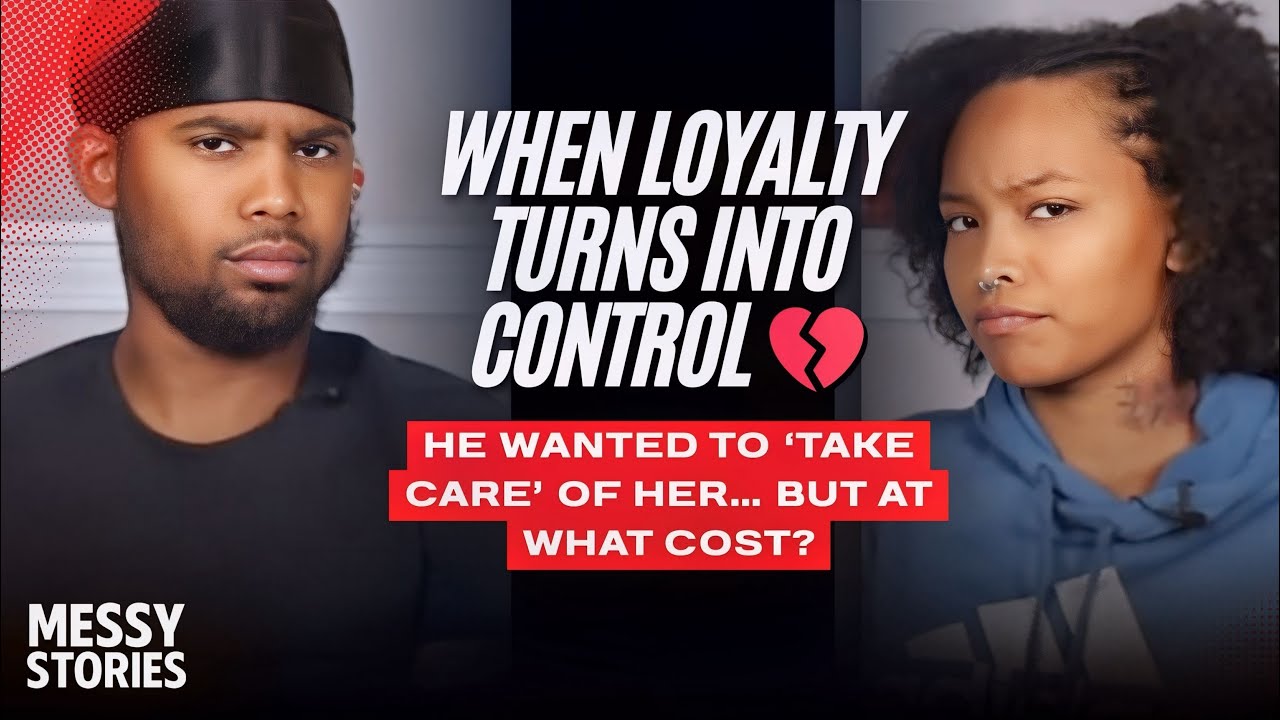
The Offer That Sounded Like a Love Story
Let's be honest — on the surface, this sounds like a fantasy. Your partner looks you in the eyes and says, 'You don't have to grind like this anymore. Let me take care of you.' For a lot of us, that hits different. We've been conditioned to romanticize that kind of gesture, to see it as the ultimate proof that someone loves you enough to carry the weight. And when you're exhausted, when work is draining you, when someone you trust is offering you a soft landing? You take it. Of course you do.
That's exactly what happened with the woman who sent her story to our inbox. Her boyfriend made the pitch — leave your job, I'll provide for everything, you don't need to worry. And she believed him. Not because she was naive, but because people who love each other make promises like that and mean them. At least, that's how it's supposed to go. What she described in the beginning sounds genuinely sweet: a partner stepping up, wanting to be her person, wanting to be needed. We're not here to mock that impulse. But we are here to talk about what happened next.
When 'I've Got You' Starts to Feel Like 'You're Not Going Anywhere'
Here's where the story shifts — and honestly, it's the shift that made us stop and rewind. Because she didn't write to us saying 'my boyfriend is a monster.' She wrote to us genuinely confused, asking if she was the problem for wanting her independence back. That detail alone tells you so much about how insidious this kind of dynamic can be.
She started noticing patterns. The caretaking that once felt romantic began to feel restrictive. The support started coming with strings she hadn't agreed to. And now, financially dependent on him, she's stuck in that awful mental loop so many people in controlling relationships know too well: Is this real, or am I overreacting? Am I ungrateful? Did I do this to myself?
Here's what we want to say clearly — financial dependence is one of the most powerful tools of control in a relationship, and it doesn't have to come with yelling or obvious manipulation to be effective. It just has to make leaving feel impossible. When you have no income, no financial cushion, and no immediate way to rebuild your independence, even a raised eyebrow from your partner can feel like a threat. You don't need someone to lock the door if they've already taken away your ability to walk out of it.
The Red Flags We Can't Ignore (Even If She's Still Weighing Them)
We want to break this down because Curtis and Honade have seen versions of this story land in our inbox more than once, and there are patterns worth naming.
Red flag one: The ask to quit came from him, not her. This wasn't her dream to stop working — it was his suggestion. That matters. When someone else architects your dependency, you have to ask why.
Red flag two: What felt like love 'gradually began to feel suffocating.' Gradual is the key word. Control rarely announces itself. It shows up as concern, then preference, then expectation, then consequence. By the time you notice the walls, they've already been built.
Red flag three: She's questioning her own reality. She's not asking 'is he controlling?' — she's asking 'am I wrong for wanting autonomy?' That reframe, where the victim becomes the one who has to justify a basic human need, is a hallmark of emotional manipulation, whether intentional or not.
Now — and this is important — we don't know his side. We don't know if he's aware of how his behavior is landing, or if this is calculated. What we do know is that her feelings are real and her situation is genuinely precarious. Wanting to work, wanting financial independence, wanting to not have to ask permission to exist in your own life? That's not ungrateful. That's human.
So What Do You Actually Do When You're Already In It?
This is the part of the conversation we think gets skipped too often. Everyone loves to say 'just leave' like that's a sentence that makes sense when you have no income and someone else controls the finances. So let's be real about what reclaiming power actually looks like from inside a situation like this.
First, information is everything. Know what you have access to — accounts, assets, anything in your name. Not to be sneaky, but because knowing your own financial picture is a basic right, not a betrayal.
Second, start rebuilding your network quietly. Isolation is control's best friend. If you've drifted from friends, family, or professional contacts since leaving your job, start reaching back out — not dramatically, just consistently.
Third, think about what re-entry into work could look like. Even small steps — updating a resume, reaching out to a former colleague, looking at part-time options — start to shift the internal story from 'I can't leave' to 'I'm building toward being able to.'
And finally, talk to someone outside the relationship. A friend, a counselor, anyone who can reflect reality back to you when you've been inside a dynamic long enough to lose your baseline. She deserves that clarity. So do you, if any of this is hitting close to home.
Our take
Curtis and I went back and forth on this one, because there's a version of this story where the boyfriend genuinely meant well and just has no idea how controlling he's become. And there's another version where this was the plan all along. The truth? It almost doesn't matter which one it is, because the outcome for her is the same either way — she's dependent, she feels trapped, and she's been made to feel like wanting her own life back is somehow the unreasonable position. That's not love. That's a power imbalance dressed up in romantic language. We're rooting for her to find her footing, and we really hope she has people around her who can help her see clearly. Nobody should have to negotiate for their own autonomy inside a relationship. That's not a partnership — that's a leash.
Genuine support lifts you up and leaves the door open — it doesn't quietly remove your ability to walk through it. If 'being taken care of' has started to feel like being kept, trust that feeling.