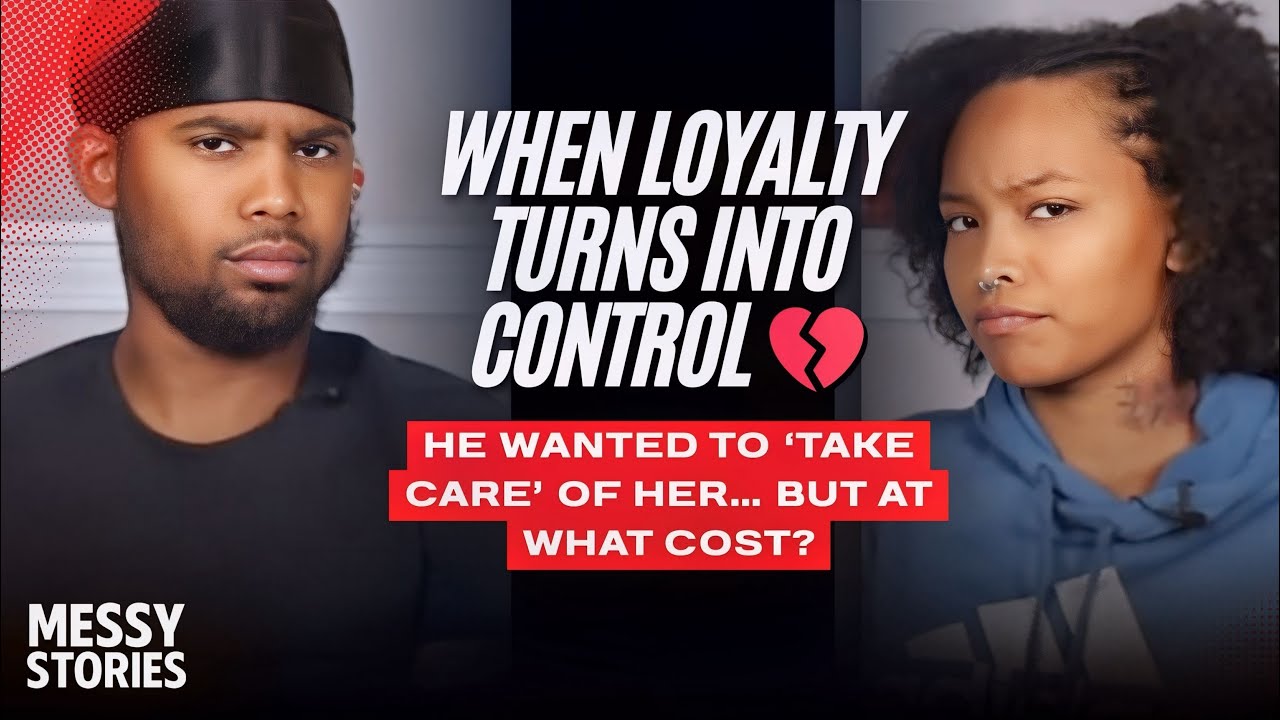
Eleven Months In and She Thought She Knew Where This Was Going
There's a particular kind of confidence that settles in around the ten-month mark of a relationship. You've survived the honeymoon phase, you've met the friends, you've probably had at least one real fight and come out the other side. You start using the word 'we' without thinking about it. You make plans that stretch past next weekend. That's exactly where she was — eleven months deep, feeling like they were building something real, something with a future attached to it. So when a financial crisis hit and she needed somewhere stable to land, the person she turned to was him. Of course it was him. Who else do you call when the floor drops out?
Here's the thing about asking your partner for help during a vulnerable moment: it's not just a practical request. It's a test of the relationship's foundation, even if you're not consciously running the experiment. When you say 'I need you,' you're really asking 'are you actually in this with me?' She needed a place to stay. She asked if she could move in. And he said no.
The Refusal That Changed Everything
We want to be fair here, because we always try to be — moving in together is a big deal. Eleven months isn't nothing, but it's also not forever. Some people have genuine, reasonable hesitations about cohabitation that have nothing to do with how much they care about someone. Lease complications, roommate situations, personal space needs, financial arrangements — these are real things. We get it.
But — and this is a significant but — there's a difference between 'I have complicated logistics and I need us to figure this out together' and a flat refusal that leaves your partner without stable housing. The details of exactly why he said no aren't fully spelled out, but what we do know is that his answer didn't come with a solution. It didn't come with a 'let me help you figure out another option' or 'I can't do this permanently but let's get you through the next month.' It came with a no that left her, by her own account, without a stable place to live. That's not a boundary. That's an abandonment dressed up as one.
And she felt it. You can feel the difference between someone protecting their space and someone protecting themselves from you. One of those things is a conversation. The other is a verdict.
The Ghost: Justified Exit or Emotional Escalation?
So she ghosted him. Full stop, no contact, gone. And now — as tends to happen when the dust settles and you're somewhere safe enough to think — she's sitting with the question of whether she went too far.
Here's our honest breakdown of the ghosting debate, because MessyFam, we have THOUGHTS. Ghosting as a response to someone who made you feel disposable during a crisis? We understand the impulse completely. When someone reveals that their comfort outweighs your stability, sometimes the only self-respecting move is to remove yourself without ceremony. You don't owe a formal breakup speech to someone who just told you, through their actions, that you're on your own.
That said — ghosting rarely gives you closure. It gives you control, which feels like closure but isn't quite the same thing. What it doesn't give you is answers. It doesn't tell you whether he had reasons he didn't communicate well, whether he panicked and would have come around, or whether he truly just didn't care enough. It leaves both people in a weird suspended state where the relationship ends but the story doesn't. She's clearly still in that suspended state, which is probably why this story got shared in the first place. The ghost protected her. It didn't resolve anything.
The real red flag we keep coming back to isn't even the refusal itself — it's what the refusal revealed about how he sees the relationship. After eleven months, did he not feel like her crisis was his problem to help solve? Did he not feel the weight of her being without housing? If the answer to both of those is genuinely 'no,' then she didn't ghost a good partner who made one bad call. She exited a relationship where she was always going to be on her own.
Our take
Okay, Curtis and I went back and forth on this one because we genuinely see both sides — and that's rare for us. Curtis thinks eleven months might be too soon to expect someone to upend their living situation, and honestly, that's not a crazy take. But here's where I land, and where I think he eventually landed too: the issue was never really about the square footage. It was about whether he showed up for her when she was scared and needed help. A partner who loves you finds a way to help, even if 'moving in' isn't the right answer in that moment. He apparently didn't do that. And she felt it so deeply that she decided silence was the only language left. We're not saying ghosting is always the right call — but we understand why it was hers. The question she's really asking herself isn't 'did I overreact?' It's 'did I matter to him?' And she already knows the answer.
A relationship isn't truly tested by the good times — it's tested by the moment you need someone to choose you, and you find out whether they will. Sometimes a refusal says more than a thousand conversations ever could.