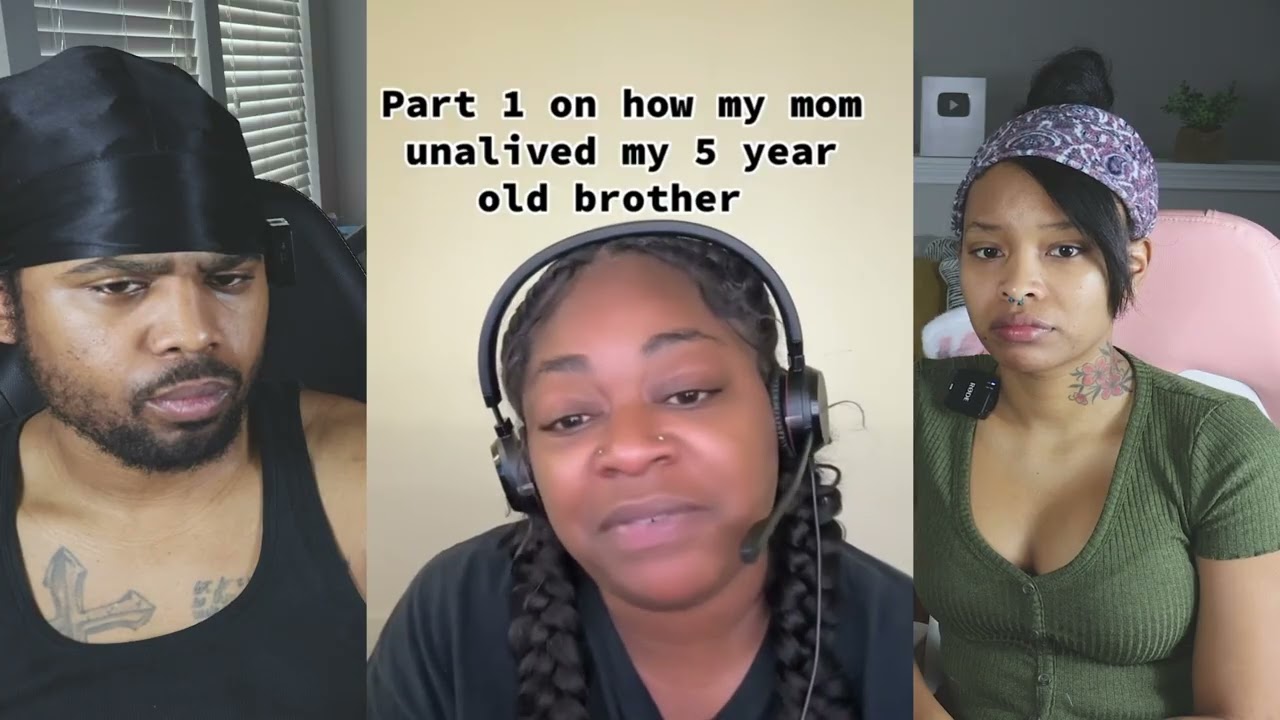
The Moment That Changed Everything
Picture this: a 12-year-old girl sitting in a routine church interview with her bishop, glasses on because she's grounded from her contact lenses, answering questions about her social life. When he asks if she has friends, if she visits their homes, if they come to hers — she panics and makes up a girl from church, a whole fictional friendship. The bishop sees right through it and immediately calls her parents in, gently offering to help with rides and activities since the family only has one driver. He's trying to be kind. Her parents hear something completely different. They come home, relay the conversation, and declare that people at church are trying to tell them how to raise their kids. Just like that, they never go back. Not to that congregation, not to any congregation where someone might actually speak to them. Instead, the family starts driving to neighboring towns to sit in church hallways, listen to services over an intercom, and leave before anyone can make eye contact. The outside world has officially become the enemy.
Full Lockdown in a Normal Neighborhood
What followed was one of the most surreal domestic situations we've heard in a long time. This family — eventually eleven kids deep — lived in a perfectly normal neighborhood and had virtually zero contact with it. Blinds permanently shut on the street-facing side of the house. A sign on the door asking people not to knock. A whole household protocol for when someone rang the doorbell anyway: go silent, don't move, maybe peek through a window but don't get caught. No bikes in the front yard. No playing outside. Groceries purchased in the next town over. The kids were homeschooled, but as the older ones got into their teens, the curriculum basically dissolved into fending for themselves. Meanwhile, dad was out running a pizza franchise all day, and mom would lock herself in her bedroom and argue with him on the phone while the older kids fed the younger ones, put them to bed, and kept the household running. Our storyteller, the eldest of the eleven, essentially became a third parent before she was old enough to drive.
“We proceeded to hide in our house in a perfectly normal neighborhood, never talking to anybody, barely ever leaving the house from that point forward.”
— the storyteller, describing the family's years-long isolation
Secret Babies and Elaborate Cover-Ups
Here's where it gets truly unreal. At some point during the lockdown years, the parents decided they wanted more children. Mom couldn't carry more pregnancies, so they paid a surrogate — driving two hours in the opposite direction of any family to attend appointments, making sure no one they knew would ever find out. Kids nine and ten arrived as twins. The family said nothing to grandparents, aunts, uncles, anyone. Extended family only found out months later when they kept pushing to visit for the holidays and the parents finally blurted out that they'd just had two babies. The shock was total. Then came child number eleven. The parents went even further this time — they were looking into having someone other than the maternal grandfather do their taxes so they couldn't be claimed as a dependent and discovered. They covered the baby carrier in the van. For months, the only people who knew about this newborn were the surrogacy clinic staff and the surrogate herself. It took a welfare check — prompted by a concerned aunt — and the subsequent body cam footage review to expose the baby's existence. Even then, the parents insisted they were babysitting a neighbor's child. Nobody believed that for a second, given that the family hadn't spoken to a neighbor in years.
“If you do not come home tonight, do not ever come home.”
— the storyteller, recounting her parents' ultimatum the night she finally left
One Community College Class Changed Her Life
Our storyteller turned 18 right around when the eleventh baby was born, so her parents were too distracted by the newborn to figure out what to do with their first adult child. She spent another year in that role — part caretaker, part emotional support system for ten younger siblings — before pushing hard enough that her parents allowed her to take a few community college classes in person. The conditions were absurd: they drove her there and picked her up, she could only be on campus during class hours, and she was absolutely not allowed to discuss anything from the outside world once she got home. Her phone was searched almost daily. When she made friends and wanted to go bowling with them, her mother needed a full security briefing before approving it. She was allowed to leave the house twice a week — once for friends, once for a date — and had to send photos every couple of hours to prove her location. Her parents also followed her around town to verify. The breaking point came one night when she stayed late on campus playing a card game. Her dad texted her a photo of himself in an emergency room parking lot, claiming she had sent her mother into a medical crisis. She was told that if she didn't come home that night, she should never come home. She turned her phone off and went to sleep. She has not been back since. That was March 2020 — she walked out of one lockdown straight into a global one, with nothing but the clothes on her back and a backpack full of school supplies.
“I turned my phone off and I went to bed. And I have never been home since then.”
— the storyteller, on the moment she chose to leave for good
The Escape, the Harassment, and the Silence
Getting out didn't mean getting free, not immediately. Her parents tracked her to her then-boyfriend's family home by using a fake porch drop-off of her belongings as a trap, then threatened to call police claiming she was a danger to herself, dump her things on the front lawn to humiliate her, and even emailed her boyfriend's parents — who were both teachers — to arrange a parking lot meeting to convince them to kick her out. That family stood by her anyway. She spent about six weeks with them while finishing her semester online, found roommates and an apartment in a new city, and eventually signed a lease. Even then, her parents demanded to know her new employer's name and location in exchange for putting her belongings on the lawn. They used that information to call her job when she didn't answer her phone. She helped her next youngest sibling get out too, co-signing his apartment. The final silence came when she texted her mother to leave her brother alone — and let slip that both of them had already been in contact with extended family, the relatives her parents had cut off years before. That was the last she ever heard from them.
How it unfolded
- The InterviewA 12-year-old lies to her bishop about having friends; he tells her parents, who interpret his concern as an attack and pull the family from church entirely.
- Lockdown BeginsThe family cuts off all outside contact, closes the blinds, posts a do-not-knock sign, and stops letting the kids play outside or interact with neighbors.
- Secret SurrogacyWith the family already in isolation, the parents hire a surrogate two hours away and successfully hide the births of twins and then a third child from extended family for months.
- Welfare CheckA concerned aunt calls in a welfare check; police arrive and body cam footage later reveals the secret newborn, blowing the parents' cover with extended family.
- First Taste of FreedomAt 19, the storyteller negotiates her way into community college classes, begins making friends, and starts quietly questioning the reality she was raised in.
- The UltimatumAfter a night staying late on campus, her parents tell her not to come home if she doesn't return immediately; she turns off her phone and never goes back.
- Full EscapeShe survives six weeks at her boyfriend's family's home, helps her next sibling get out, and goes permanently no-contact after revealing the family has reconnected with banned extended relatives.
Our take
Eleven children hidden from the world, and it didn't begin with a manifesto or a compound — it began with a single church interview that apparently rewired two people's entire understanding of what safety means. That's what we keep circling back to: the terrifying normalcy of the starting point. Overprotective parents exist everywhere. But something cracked open in this family, and then the incremental slide — the contact lens punishment, the bishop's reasonable offer of help reframed as a threat, the literal sign on the door — each step followed its own twisted internal logic. And then secret surrogate babies. A 15-passenger van with a hidden carrier. This stopped being a parenting story and became something you'd find in the thriller section. What genuinely moves us is that she absorbed a childhood's worth of fear-based control, spent her teenage years raising ten kids who weren't hers to raise, got exactly one year of community college as her first real breath, and still walked out with a backpack and her wits intact. That's not an accident. That's someone who protected her own soul against enormous odds. We're fully in her corner — and in the corner of every sibling still inside that house.
Control dressed up as protection is still control — and eventually, even the most isolated kid will find a window. She found hers, and she ran.
Questions people ask
Why did the parents hide their surrogate children from everyone?
According to the storyteller, her parents never gave a clear reason beyond claiming people were trying to tell them how to parent. They went to extraordinary lengths — driving two hours away for appointments and deliveries — to ensure no neighbors, extended family, or anyone outside the home knew the younger three children existed.
How did the family's isolation finally get discovered?
A welfare check prompted by a concerned aunt brought police to the door. The parents initially claimed the secret baby was a neighbor's child they were babysitting, but no one believed it given the family's well-known policy of never speaking to neighbors. Body cam footage from the visit later confirmed the baby's existence to extended family.
How did she finally escape her parents' control?
After one year of community college classes, her parents gave her an ultimatum one night to come home or never return. She turned her phone off, stayed where she was, and never went back — leaving with only her clothes and a school backpack, and eventually finding an apartment in a new city.
Did she ever get to see her younger siblings after leaving?
Her parents used access to the younger siblings as leverage and refused to allow contact. Even while still communicating with her parents in the months after she left, she was not permitted to speak with her brothers and sisters still in the house.