The Story That Made Us Stop Scrolling
We've covered a lot of messy situations on this site. Cheating, betrayal, family secrets that blow up decades of trust — we've seen it all. But every once in a while, a story lands in our lap that makes us genuinely pause and go, 'No. Wait. She did WHAT?' This is one of those stories.
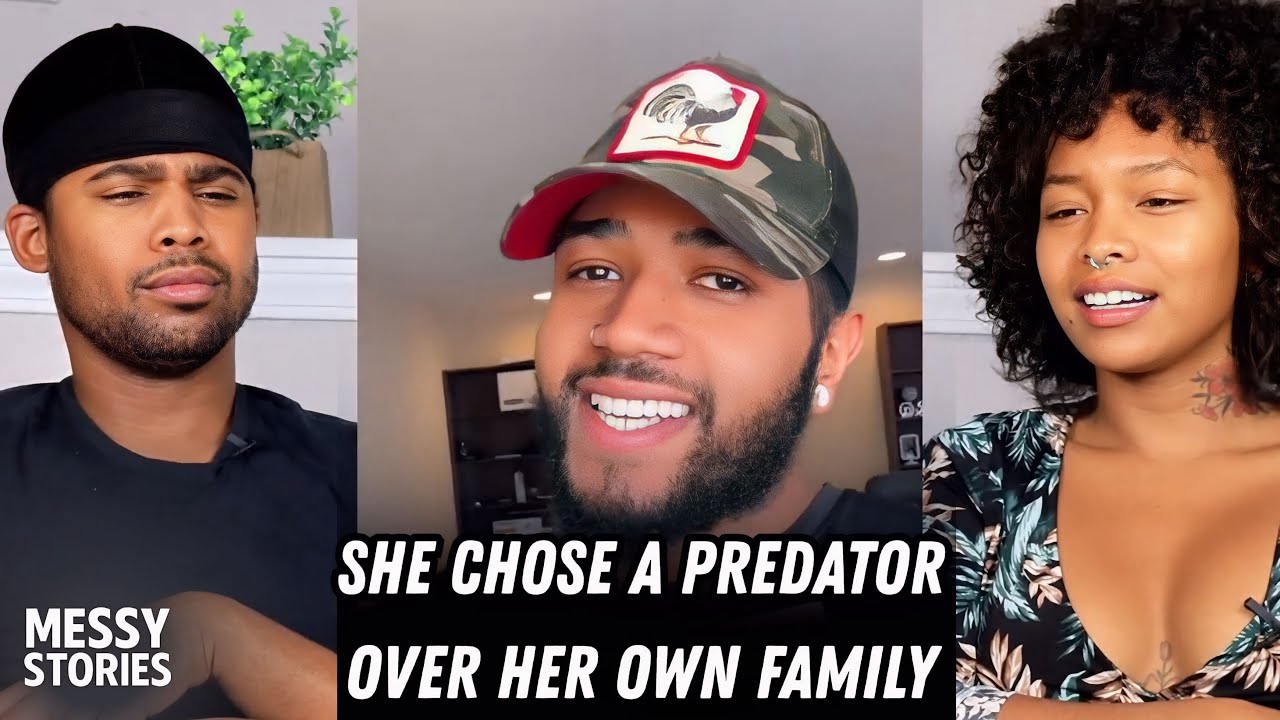
The original video comes from TikTok creator @sloowmoee, and it centers on a mother whose repeated pattern of choosing romantic partners — specifically, the wrong ones — over her own family's safety and wellbeing created consequences that rippled outward in ways that are genuinely hard to comprehend. We're not talking about someone who made one bad call in a moment of weakness. We're talking about a pattern. A cycle. A woman who kept returning to harmful relationships even as the people closest to her suffered the fallout in real time.
That word — predator — is in the title for a reason. This isn't a story about someone who just had bad taste in men or picked emotionally unavailable partners. The framing here is serious, and the weight of it sits heavy on everything that follows.
How Does a Pattern Like This Even Start?
Here's what we always find ourselves asking with stories like this: how does someone get to the point where they consistently choose a romantic partner over their own children, their own family, their own blood? Because from the outside, it seems incomprehensible. And yet — it happens more than any of us want to admit.
There's usually a cocktail of things at play. Trauma bonding is real. When someone has been in a cycle of unhealthy attachment long enough, the dysfunction starts to feel like love. The chaos becomes familiar. The red flags stop reading as danger signals and start reading as intensity, passion, need. And when someone needs you — even in the most toxic way — it can feel like purpose, especially for someone who may have spent their whole life feeling unseen.
None of that is an excuse. We want to be really clear about that. Understanding the psychology behind a choice is not the same as excusing the consequences of it. And in this story, those consequences landed on people who had no say in the matter — family members who were left dealing with the damage while she stayed in the relationship.
That's the part that keeps us up at night. The people who didn't choose this. The ones who just happened to be born into or connected to someone whose blind spots were this catastrophically large.
The Choices That Become Increasingly Impossible to Defend
What Curtis and Honade dig into in their reaction is the progression — the way this situation escalated not in one dramatic moment but through a series of choices that compounded on each other. Each decision she made to stay, to look away, to prioritize the relationship over the warning signs, built on the last one. And at some point, the family members around her had to start asking themselves: does she even see what we see? Does she know what we know? And if she does — why is she still choosing this?
That last question is the one that haunts every story in this category. Because 'she didn't know' is one kind of tragedy. But 'she knew and stayed anyway' is something else entirely. The deeper this story goes — and it goes deep — the harder it becomes to extend the benefit of the doubt.
There's a moment in situations like this where the people being harmed have to make their own impossible choice: do we keep trying to reach her, or do we protect ourselves and step back? Neither option feels okay. One keeps you in the blast radius. The other means walking away from someone you love. Families fracture in exactly this way, quietly and then all at once, and the scars from that kind of rupture don't heal quickly or cleanly.
What Finally Breaks the Cycle?
That's the question hanging over this whole story — what finally forced this mother to confront the damage her choices were causing? Because something did. Something always does, eventually. It's either a moment of clarity, or it's a consequence so severe it can no longer be ignored, or it's the people she loves finally reaching their limit and making her feel the weight of their absence.
We don't know exactly how this one resolves. The story is still unfolding in the way these stories do — messy, nonlinear, with no clean ending tied up in a bow. But what we do know is that the family members at the center of this paid a price they never should have had to pay. And that regardless of what drove her choices, the harm done to the people around her was real.
If you've ever been the family member in a situation like this — the one watching someone you love choose wrong, again and again — you already know there's no script for it. You just survive it, and you try to protect yourself in the process.
Our take
Okay, we have to be honest with you all — this one got to us. Curtis was pacing by the end of the video. Because there's a specific kind of grief that comes with watching someone repeatedly choose harm over the people who love them most, and this story is soaked in it. We never want to be cruel about real people on this site, and we're not going to start now — but we can say clearly that when children or vulnerable family members are in the picture, the calculus changes entirely. Your right to make your own choices ends where someone else's safety begins. Full stop. The family members left holding the fallout of these decisions deserved so much better. We hope they found their way to solid ground. And if you're watching this and you recognize this pattern in your own life — whether you're the one staying or the one watching someone you love stay — please know that you don't have to keep absorbing someone else's choices as if they're yours to carry.
A pattern of choosing the wrong person isn't just a personal problem — it becomes everyone's problem when family is in the crossfire. The people who love you most should never be the ones paying the highest price for your blind spots.