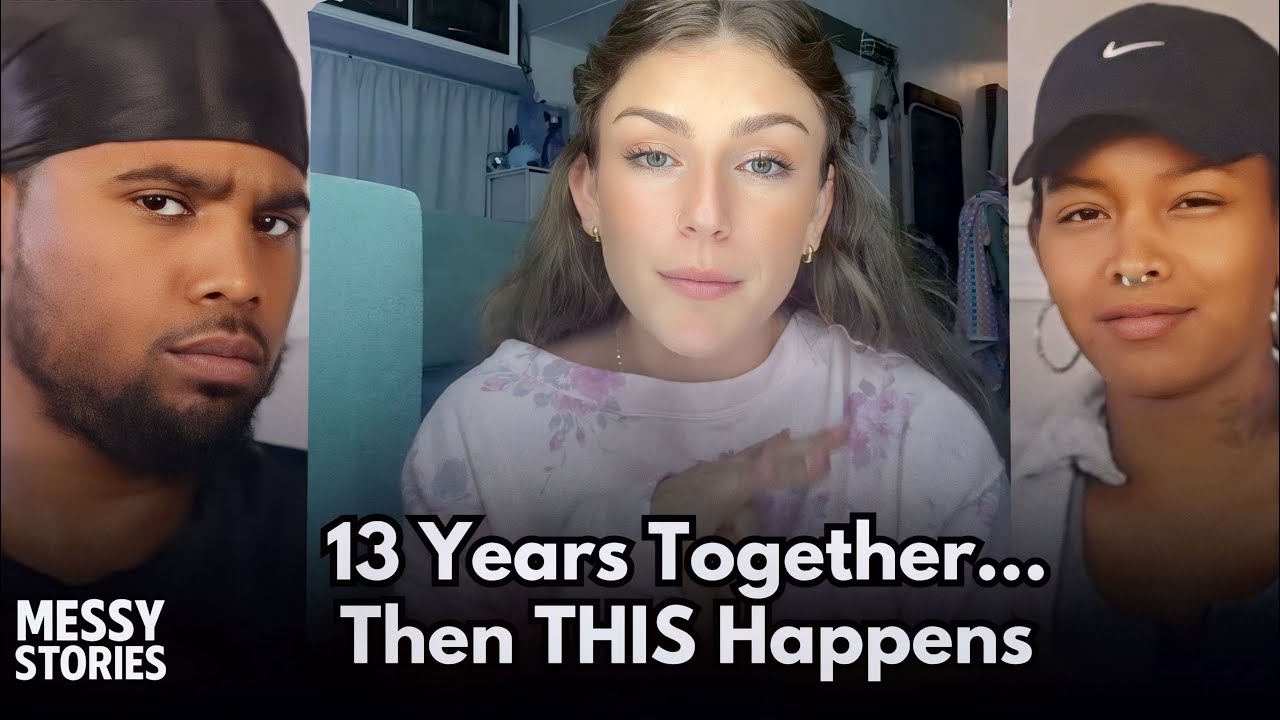
The Man She Thought She Married
We've all heard someone describe their partner as 'deep' or 'spiritually gifted' and felt a little twinge of either admiration or concern depending on the context. In this woman's case, she genuinely believed she had found someone exceptional — brilliant, spiritually attuned, the kind of person who seemed to operate on a different frequency than everyone else. And honestly? That's not a red flag on its own. Lots of curious, intellectually alive people have rich spiritual lives. The problem isn't the spirituality. The problem is what that spirituality eventually became a vehicle for.
What makes this story so gutting to sit with is the ordinariness of the beginning. She didn't walk into a compound. She didn't sign up for a movement. She fell in love with a man, married him, and built a life with him — the most normal sequence of events imaginable. The transformation didn't announce itself. It crept. And that creeping quality is exactly what makes stories like this one so important to talk about out loud, because the people living inside them are often the last ones to see the full picture.
Eighty Acres and a Concept Called 'Sovereignty Marriage'
Let's talk about the mechanics of what unfolded, because the details here are not incidental — they are the story. At some point, this couple ended up isolated on 80 acres of land. Eighty acres. That is not a quirky homestead situation. That is a deliberate removal from community, from support systems, from anyone who might reflect reality back at you. Physical isolation is one of the oldest and most effective tools of psychological control, and it doesn't require chains or locks. It just requires enough distance between you and everyone who loves you.
Then there's the concept he introduced: 'sovereignty marriage.' We don't have a full definition of what he meant by that term, but the framing alone tells you everything. The word 'sovereignty' in this context isn't about mutual freedom — it's about rewriting the rules of the relationship in ways that benefit whoever is doing the rewriting. When someone in a partnership starts inventing new ideological frameworks for how the relationship works, especially ones with official-sounding names, that is a manipulation tactic dressed up as philosophy. It creates a system where any pushback you have can be dismissed as you 'not understanding the concept' rather than you correctly identifying that something is wrong.
This is the part of the story where we want to reach through the screen and grab her hand, because we know — we know — how easy it is to second-guess yourself when someone you love is confidently presenting a whole alternative worldview. You start wondering if you're the one who's limited. You're not. You never were.
When He Took Their Child: The Moment Everything Broke Open
If there is a single moment in this account that crystallizes just how dangerous the situation had become, it's this: he disappeared with their child without her permission. Full stop. Whatever ideological scaffolding had been constructed around this relationship, whatever 'sovereignty' framework had been installed to explain away the control — none of it could reframe that act as anything other than what it was. The weaponization of a child is one of the most devastating moves an abusive partner can make, and it's often the moment that forces a reckoning that all the gradual escalations somehow didn't.
There's a reason this story is being told at all, and it's because she survived it enough to tell it. But we want to be careful here not to fast-forward to relief before sitting in the weight of what that experience must have felt like — to be isolated, psychologically manipulated, operating inside a belief system your partner constructed specifically to keep you compliant, and then to have your child taken from you. That is not a bad relationship. That is a dangerous one. And the fact that it started as something that looked completely normal is the whole point.
The incremental nature of this kind of transformation is what makes it so hard to name while you're inside it. Each individual step seems like maybe just a phase, maybe just a quirk, maybe just something you need to be more open-minded about. It's only when you zoom out and see the full arc — from 'brilliant spiritual man' to cult leader with 80 acres and a missing child — that the pattern becomes undeniable.
Our take
Curtis and I could not stop talking about this one after we watched it, and we keep coming back to the same thing: the word 'gradual.' That word is doing so much heavy lifting in this story. Because nobody — nobody — would marry a man they knew was going to become a cult leader who isolated them and disappeared with their kid. The danger was in the slowness of it. The way each new layer probably felt like just another evolution of the person she already loved. That's what makes this account so necessary and so hard to watch at the same time. We're not here to judge the choices she made — we're here to honor the fact that she's talking about it, because someone watching this right now might be on acre two of their own eighty. Pay attention to the frameworks. Pay attention to the isolation. Pay attention to who is rewriting the rules.
When someone you love starts building a private ideology that conveniently requires your compliance, that's not depth — that's a blueprint. The most dangerous relationships don't start dangerous; they get there one redefined boundary at a time.