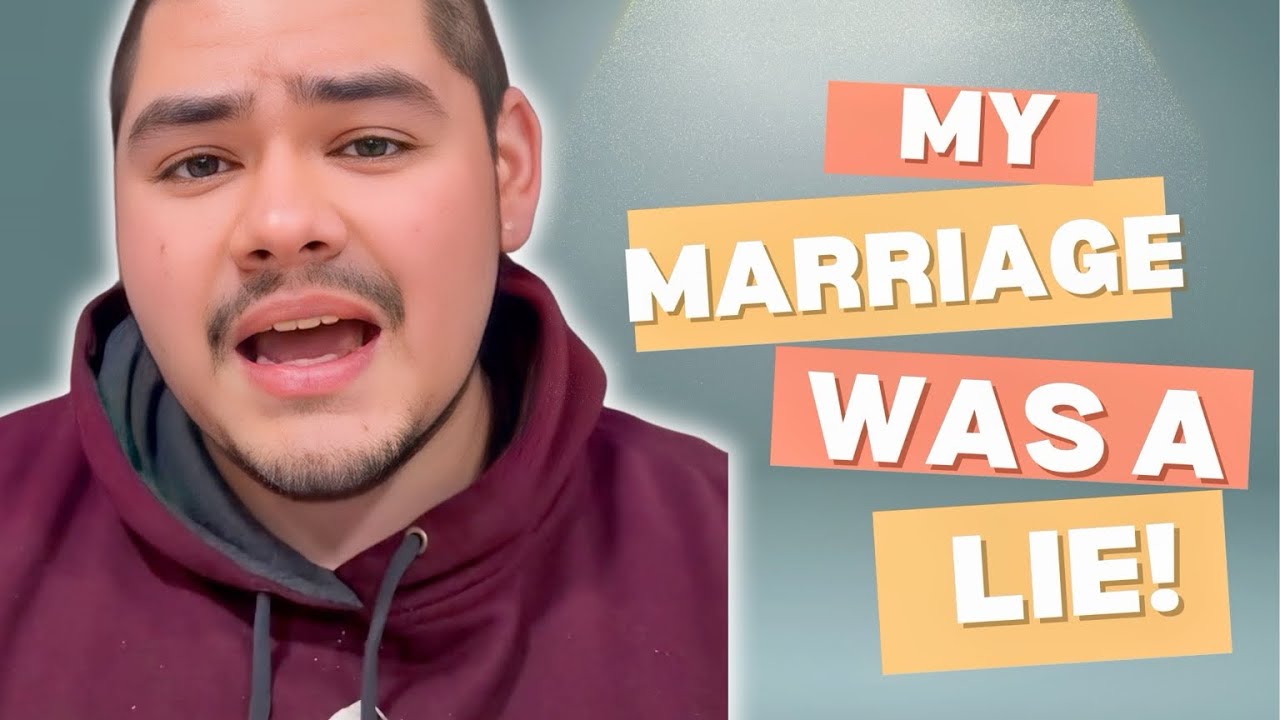
When 'Something Is Off' Doesn't Have a Name Yet
We've all had that feeling in a relationship — that low hum of wrongness you can't quite locate. You tell yourself it's stress, or a rough patch, or just the way long-term love gets complicated. You catalog the moments: the distance, the flashes of frustration, the behavior that doesn't quite fit the person you thought you married. You make up stories to explain it because the alternative — that there's something much bigger happening beneath the surface — feels too enormous to sit with.
That's exactly where Ciara found herself. By her own account, she was navigating a marriage full of disconnects she couldn't explain. Emotional withdrawal. Patterns that felt off but didn't have a label. She was working with an incomplete picture, trying to solve a puzzle while someone had quietly pocketed half the pieces. And here's the thing that guts us every time we hear a story like this: she wasn't wrong that something was happening. She was just wrong about what it meant — and that distinction changes absolutely everything.
The Silence That Shaped Everything
Ciara's husband had been living with schizophrenia — and he had not told her. Let that sit for a second.
We want to be careful here, because this is the part of the story where it's easy to rush toward judgment and miss the full human weight of what was happening. Schizophrenia is one of the most misunderstood, most stigmatized mental health conditions that exists. People who live with it often carry enormous shame, fear of rejection, and a complicated relationship with their own perception of reality. The decision to disclose — or not disclose — a diagnosis like that to a romantic partner is never simple, and it's rarely made from a place of malice. It's usually made from a place of profound fear.
But. And this is a real but. Ciara was his partner. She was in this marriage, showing up every day, trying to make sense of a relationship she didn't have the full context to understand. His silence — however it came to be — left her navigating in the dark. She was interpreting his internal battle through the only lens she had available: their relationship dynamics. So when he seemed distant, she likely wondered what she'd done. When the frustration surfaced, she probably turned it inward. That's what we do when we love someone and something feels wrong — we assume we're part of the problem. Imagine carrying that weight for the entire length of a marriage, only to find out the map you were using was missing half the terrain.
The Moment the Lens Shifts — and What Comes After
When Ciara finally learned the truth, something profound happened: her entire history with her husband had to be re-read. Every moment she'd questioned, every disconnect she'd catalogued, every time she'd felt confused or hurt or shut out — all of it suddenly had a different explanation. That's a strange and disorienting kind of grief, actually. You're not grieving the loss of the relationship exactly. You're grieving the version of the story you'd been telling yourself, and all the pain you carried inside a narrative that wasn't even accurate.
This is what mental illness in intimate relationships can do that almost nothing else does: it creates two entirely different lived experiences happening simultaneously inside the same marriage. Ciara was living in one reality. Her husband was fighting battles inside a reality she literally could not access or see. And neither of them, arguably, had the full picture of what the other was enduring.
The question the story leaves us with — and it's not a small one — is how Ciara responded once she understood. Does understanding change love? Does it change hurt? Can you hold compassion for someone's suffering and also hold the very real pain of having been kept in the dark? We think the answer is yes, and that holding both at once is one of the hardest things a person can be asked to do.
Our take
Okay, MessyFam, here's where we land on this one. We are not here to drag Ciara's husband, full stop. Schizophrenia is real, the stigma around it is brutal, and we genuinely don't know what fear or shame drove his silence. That matters. AND — Ciara deserved to know. Those two things are both true and they don't cancel each other out. What breaks our hearts most is imagining her spending all that time internalizing behavior that was never really about her, quietly wondering what she was doing wrong in a marriage where the real story was happening somewhere she couldn't reach. If you are with someone and you are carrying a diagnosis that is actively shaping your relationship, please — find a way to bring your partner into that. Not because you owe anyone your trauma, but because love cannot do its job in the dark. We're rooting for both of them, honestly.
Mental illness doesn't make someone a villain, but silence in a marriage has real costs — and Ciara's story is a reminder that loving someone fully means letting them love the real you, not a carefully managed version of it.