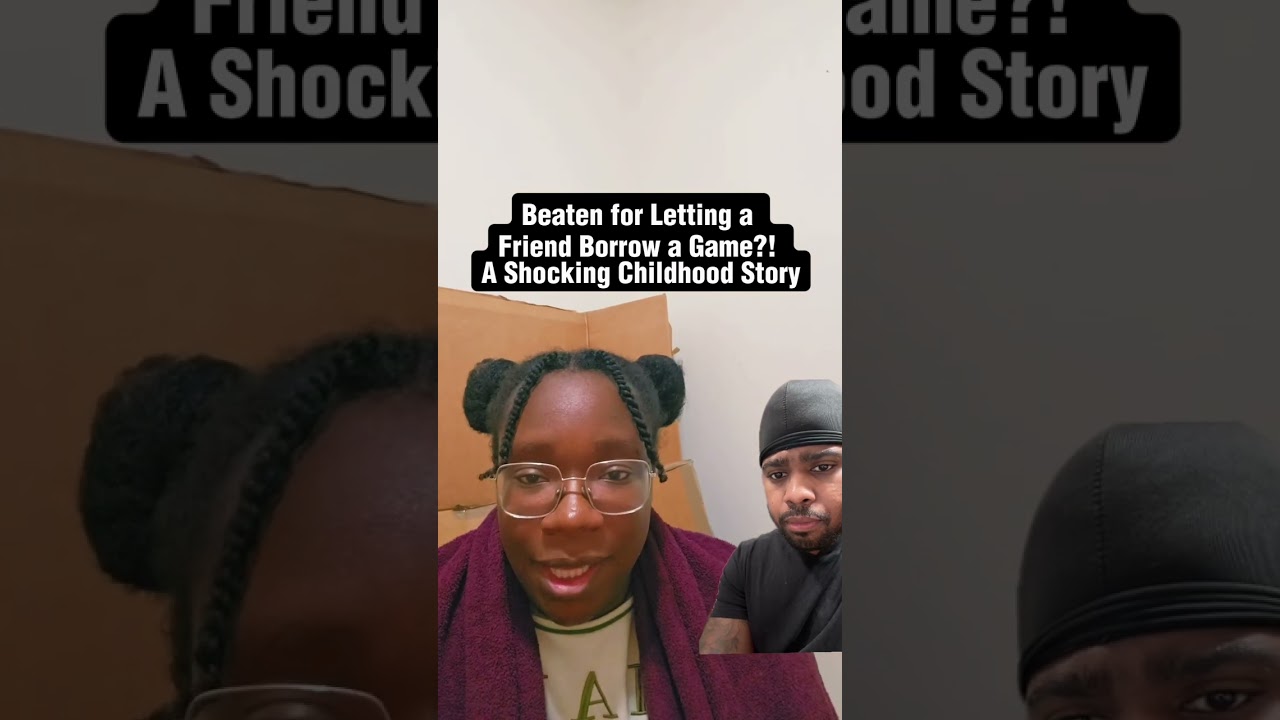
It Started the Way a Million Childhood Stories Start
A kid. A best friend. A video game. The kind of casual, generous, completely normal moment that happens in every neighborhood, in every generation — 'hey, you wanna borrow this?' That's it. That's the whole innocent beginning. There was no scheme here, no recklessness, no red flag. Just a child doing what children do when they trust someone: they share. And if you grew up with a best friend, you know exactly how that feels. You lend things without thinking twice because that's what friendship is supposed to mean. The game goes home with the friend, and you don't think about it again because why would you? You trust them.
Except the game went missing. And that's where everything — absolutely everything — went sideways. We don't know exactly how it disappeared or what the friend said when it came up, but what we do know is that the game didn't come back. And somehow, that absence became the match that lit a fire no child should ever have to stand inside.
A Week of Beatings for a Missing Game
Here's where we have to sit with the uncomfortable reality of what this story is actually describing: a parent, upon learning that a borrowed item had gone missing, responded not with a conversation, not with a measured consequence, not even with a single bad night — but with a week of relentless physical punishment. Seven days. Over a video game.
We want to be careful here, because we're not in the business of tearing people apart without the full picture. But we also can't soften what this was. A child did something kind — something they were probably taught to do — and when it went wrong in a way that was arguably out of their control, the response was sustained, repeated physical harm. That's not discipline. Discipline is about teaching. What this child was taught during that week wasn't responsibility or accountability. What they were taught was that the world inside their own home was not safe, and that a mistake — even an innocent one — could bring pain that lasted for days.
The emotional math a child does in that situation is brutal and fast: if lending a game to my best friend can cause this, what else might set this off? What else am I not safe from? That calculation doesn't go away when the week ends. It moves in.
What Fear-Based Discipline Actually Does to a Kid
We talk a lot on this site about betrayal between adults — partners, siblings, friends. But there's a particular kind of betrayal that hits different, and it's the one that comes from a parent, because parents are supposed to be the original safe place. When that safety is shattered — especially repeatedly, over the course of a week — a child doesn't just experience pain in the moment. They reorganize their entire inner world around it.
Research on fear-based discipline consistently shows that punishment rooted in physical harm and unpredictability doesn't build responsibility — it builds hypervigilance. Kids who grow up in that environment become expert at reading rooms, shrinking themselves, anticipating danger. They learn to manage other people's emotions at the expense of their own. And here's the specific tragedy in this particular story: the incident that triggered everything was an act of trust and openness. Lending something to a best friend. So what does a child's nervous system do with the lesson that openness leads to punishment? It closes. It learns to hold things tighter, share less, trust fewer people. The very qualities that make relationships work get quietly trained out of them.
This story also raises a question we keep turning over: what was really going on with the parent? Extreme reactions to small things are almost never actually about the small thing. A week of beatings over a missing video game suggests something else was boiling underneath — stress, control, their own unresolved wounds. That doesn't make it okay. It just means the child was absorbing consequences for something they had nothing to do with.
The Friendship, the Game, and What Got Lost
We're also sitting here thinking about the best friend in this story. Because that relationship — the one that started all of this with a simple, trusting 'you can borrow it' — had to survive the aftermath too. How do you look at your best friend the same way after what their borrowed game cost you? How does the friendship hold that weight? Maybe it did. Maybe it didn't. But we'd bet that something shifted, because it's nearly impossible to go through something that traumatic and not associate it, even irrationally, with the person who was adjacent to it.
And that's the quiet, compounding damage of disproportionate punishment: it doesn't just hurt the child in the moment. It ripples outward. Into friendships. Into how they understand authority. Into how they'll eventually navigate their own relationships as adults — whether they'll be able to ask for things back, set limits, trust that a mistake won't cost them everything. This story is still unfolding in the person who lived it, long after the week ended and the game was forgotten.
Our take
Curtis and I genuinely struggled sitting with this one, because there's a version of 'strict parenting' that people defend, and then there's this — and these are not the same thing. A week of physical punishment for a child who lent a game in good faith is not discipline, it's not a lesson, it's not tough love. It's a child being hurt, repeatedly, for something that was largely out of their control. What breaks our hearts most is that the original act was generous. This kid was being a good friend. And that generosity got punished so severely that it probably took years to feel safe being generous again. If you grew up in a house like this, we see you. And if you're raising kids right now — please hear this: fear might get short-term compliance, but it costs you the relationship, and it costs your kid so much more than that.
A missing video game is a five-minute conversation, not a week-long punishment — and the difference between those two responses is the difference between a child who learns accountability and a child who learns to be afraid. The item was replaceable. The damage to that child's sense of safety was not.