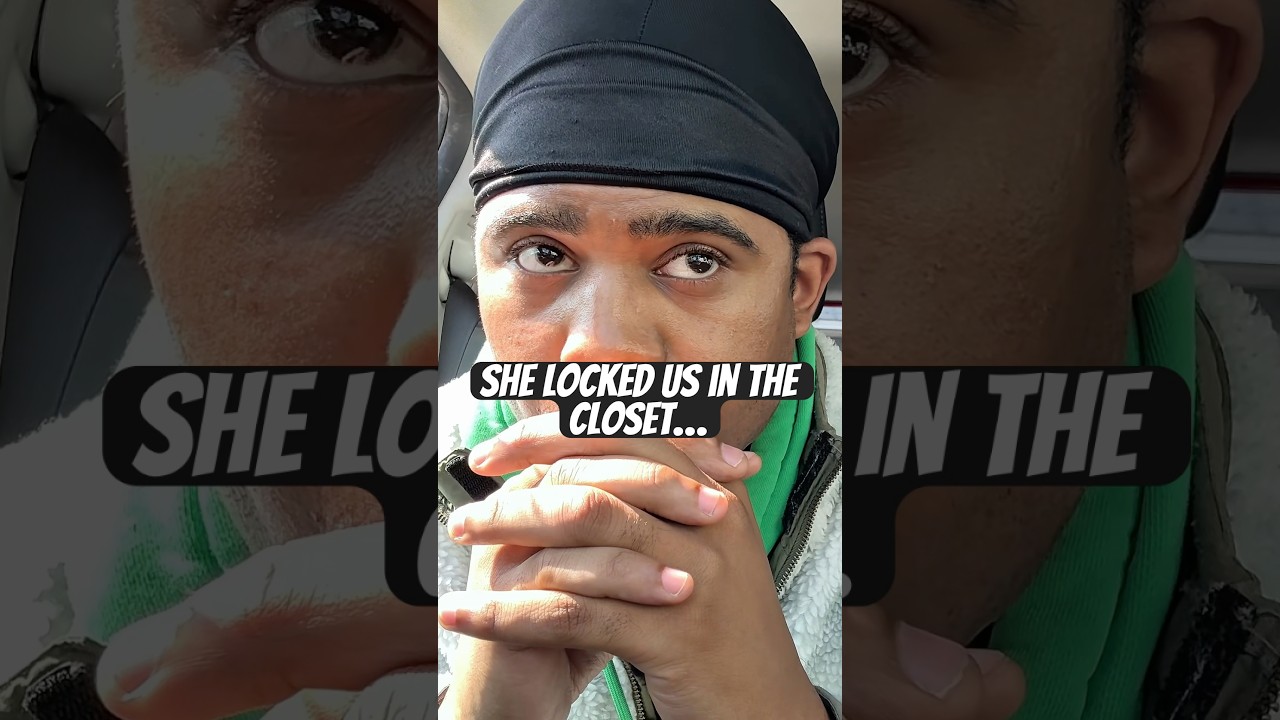
When 'Punishment' Crosses Into Something Much Darker
We need to talk about this one, because it hit different. A member of our Messy Stories community shared something this week that we genuinely could not stop thinking about — the story of being locked in a closet as a child. Not once. Not a brief, terrifying timeout situation. We're talking about something extended, something repeated, something that became so normalized in this person's childhood that the closet stopped being a punishment and started being a place. Their place. Their entire world, as they put it.
That distinction matters enormously. There's a specific kind of horror in a child adapting so thoroughly to confinement that it reshapes their identity rather than just scaring them. Adaptation is what kids do — it's actually one of the most heartbreaking things about childhood trauma. Children are wired to find a way to survive their environment, whatever that environment looks like. So when the environment is a closet, they learn to live in the closet. They learn to be small. They learn to be quiet. They learn that the world outside is conditional, and the world inside — however dark and cramped — is at least predictable.
The Closet as a Psychological Blueprint
What makes this story cut so deep is the narrator's own reflection on how that experience didn't stay in the past — it traveled with them. They connect their time in that physical space directly to the person they became: their internal world, the way they talk to themselves, the coping mechanisms they developed just to get through. That's not a small thing to reckon with out loud.
Self-talk is actually one of the most telling traces of early childhood experience. The voice we use when we're alone, when we're scared, when we're trying to talk ourselves through something hard — that voice gets built early. For someone whose formative years included extended isolation, that inner voice may have been the only company they had. It becomes a survival tool first, a personality trait second, and something you don't even notice is unusual until someone asks, 'wait, do you talk to yourself?' — which is literally what this narrator asks their audience at the end of their video. That question isn't random. That's someone recognizing a specific thread between their past and their present and pulling on it, carefully, in public.
The red flags in a situation like this are worth naming plainly: isolation as punishment, especially repeated or prolonged isolation, is recognized by child development experts as a form of psychological harm. It doesn't require physical violence to leave marks. The absence of connection, of stimulation, of safety — that absence does its own damage, quietly and completely.
Why Sharing This Kind of Story Takes Guts We Don't Always Give Credit For
Here's what we want to make sure doesn't get lost: this person chose to share this. They didn't have to. Childhood trauma involving family — especially when it implicates a caregiver — is one of the most complicated things a person can decide to speak about publicly, because it lives at the intersection of love, loyalty, shame, and survival all at once. You can be angry at what happened to you and still grieve the parent or guardian you deserved but didn't get. Both things are true. They're almost always both true.
And the way this story is framed — not as a takedown, not as a rage spiral, but as a genuine reflection on how a dark experience shaped a whole human being — that's the kind of emotional intelligence that doesn't come easy. It usually comes from a lot of time sitting with something painful and deciding, slowly, that your story is worth telling. That other people might need to hear it. That saying it out loud might loosen its grip just a little.
We don't know exactly how this narrator's story ends — what happened after, who held them accountable, what healing has looked like for them. That part is still unfolding, and honestly, it may always be. Healing from something like this isn't a finish line. It's more like learning to carry the weight differently over time.
Our take
Curtis and I both went quiet after watching this one, which — if you know us — is saying something. There's a version of this story that could feel exploitative or performative, and this is not that version. This is someone doing the hard, slow work of making meaning out of something that had no business happening to a child. The self-talk question at the end genuinely wrecked us, because it's such a specific and tender way of asking: did anyone else learn to keep themselves company because the adults around them weren't doing it? We see you. And to anyone in our community who grew up in a home where you were made to feel like too much or not enough — where love came with conditions that a child should never have to meet — we just want to say: the fact that you're here, reflecting, talking, healing? That's not small. That's everything.
A closet can hold a child's body, but it can't hold their whole story — and the bravery it takes to finally tell that story out loud is its own kind of escape.