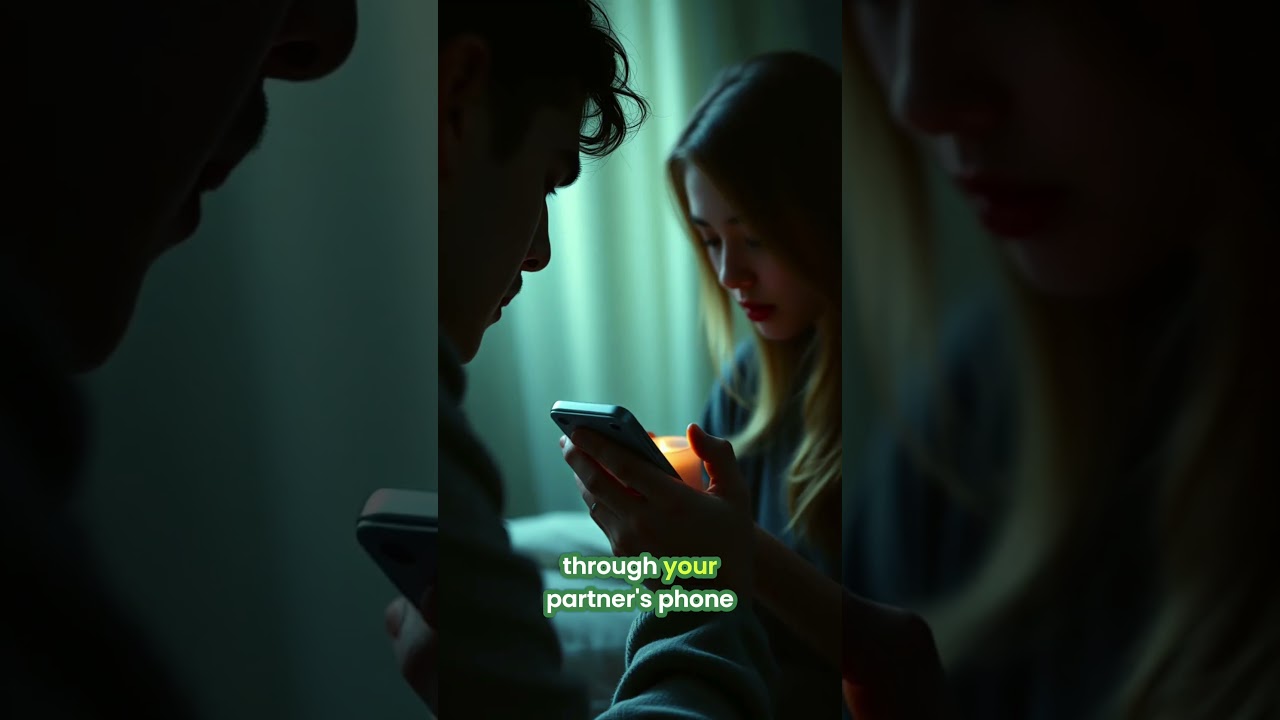
The Question Nobody Wants to Answer Honestly
We've all been there. That little voice in the back of your head, the one that says something feels off. Maybe they're protective of their phone in a way they never used to be. Maybe you caught a name you don't recognize. Maybe it's nothing — or maybe it's everything. The storyteller in this piece doesn't dance around the discomfort of that moment. They go straight at it: when is it actually okay to go through your partner's phone? And the answer they land on is messier and more honest than any clean rule could be.
The Permission Problem — and Why It Matters More Than You Think
Here's the thing most people skip over when they're spiraling at 2 a.m. debating whether to pick up that phone: what you find might not even be what you were looking for. The storyteller makes a point that genuinely stopped us in our tracks — a partner's phone isn't just a potential cheating archive. It's also private conversations with siblings, personal venting, vulnerable moments they never intended to share with anyone in the relationship. Going through someone's phone without permission isn't just a trust violation in one direction. It's an invasion of a whole world they built before you, and sometimes alongside you, that they still get to keep private. The storyteller's position is clear: unless your partner has explicitly handed you that access, you're crossing a line — even if your reasons feel justified.
“If you're not going to do anything after you go through the phone, save the heartache. Just don't go through people phone.”
— the storyteller
Then They Both Did It Anyway
This is where the story gets real. The storyteller admits it — she went through his phone, and then he went through hers. Just like that, the theoretical conversation became a lived one. And rather than frame it as a gotcha or a scandal, the storyteller uses it as a moment of self-reflection. They describe it as part of growing up, of learning through doing the exact thing you later realize you shouldn't have done. There's no dramatic blow-by-blow of what was found or who was worse. What matters is what came after: the recognition that once you open that door, you can't unknow what's on the other side — and you have to be ready for that.
“You might not be able to stomach what's in there.”
— the storyteller
The Only Advice That Actually Holds Up
The storyteller's real takeaway is the one that lands hardest: if you go through your partner's phone and you're not prepared to act on what you find, don't do it. Full stop. Crying about it and then sweeping it under the rug isn't healing — it's just delayed damage. The only reason to look, according to them, is if you're already prepared to leave. Otherwise, you're just handing yourself pain you're not going to do anything with. That's not a cynical view, honestly. That's wisdom. Because the phone check was never really about the phone — it was about whether you still trust the person holding it. And that question doesn't get answered by scrolling through their messages.
“Unless you plan on leaving — why?”
— the storyteller
How it unfolded
- The QuestionThe storyteller poses the central dilemma: when, if ever, is it acceptable to go through a partner's phone?
- The NuanceThey argue that phones hold more than potential secrets — private family conversations and personal moments that were never meant to be shared.
- The ConfessionThe storyteller reveals that their partner went through their phone first, and then they went through hers in return.
- The ReflectionRather than dramatizing what was found, the storyteller frames the mutual snooping as a hard lesson in growing up.
- The VerdictTheir final advice: only look through a partner's phone if you are already prepared to leave based on what you might find.
Our take
The "only look if you're ready to leave" rule deserves to be printed on a card and handed out at every relationship milestone, and we mean that sincerely. Curtis landed on this one hard — because there's something almost mathematically true about it. Snooping and then staying silent doesn't make you careful, it makes you a silent co-author of whatever you just found. You've swallowed it now. Good luck unswallowing it. Honade keeps coming back to the collateral damage angle, which doesn't get nearly enough airtime: you go digging for proof of betrayal and you surface a sibling's crisis, a private grief, something that was never filed under "yours to know." That changes a person in ways that have nothing to do with cheating. What earns this couple our genuine respect is the mutual confession — they're not standing outside the mess pointing fingers. They did the thing, they learned, and they're being straight with you. That's the only platform worth preaching from.
Checking your partner's phone without permission doesn't give you clarity — it gives you information you may not be equipped to handle. The real question was never what's on their phone; it's whether you still trust the person who's holding it.
Questions people ask
Is it okay to go through your partner's phone if you're suspicious?
The storyteller says suspicion might feel like a reason, but the real test is whether you're prepared to act on what you find. If you're going to stay and say nothing regardless, they advise skipping the search entirely — it only adds pain without resolution.
What happens when both partners go through each other's phones?
In this story, both partners ended up checking each other's phones, and the storyteller reflects on it as a mutual breach that ultimately became a lesson about trust and maturity rather than a dealbreaker.
Why is checking your partner's phone without permission a bad idea even if you find nothing?
Even an innocent phone can contain private conversations with family or personal thoughts your partner never intended to share. The act itself violates trust and can expose you to context you weren't meant to have.