The Kind of Secret That Rewires a Child's Entire Reality
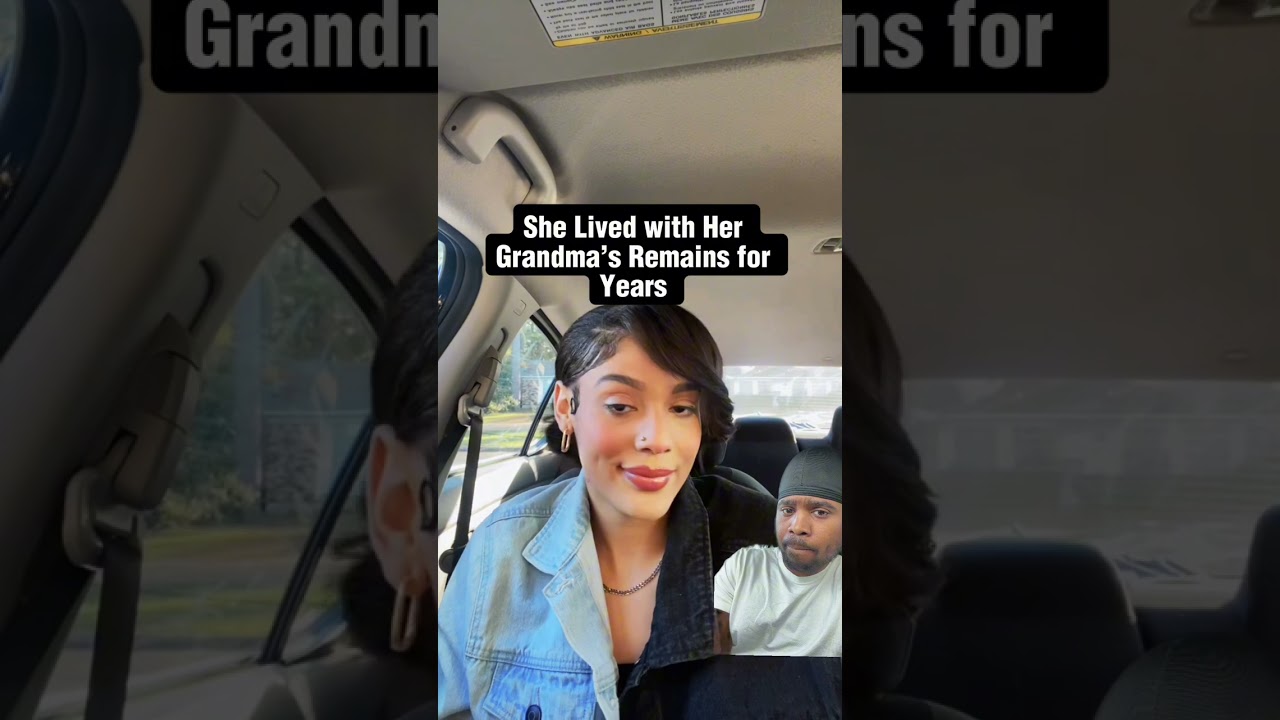
There are family secrets, and then there are things so far outside the bounds of normal that your brain almost refuses to process them. This story lands firmly in the second category. A young woman has come forward to share what her childhood actually looked like behind closed doors — and what she describes is the kind of environment that no child should ever have to navigate alone. Her grandmother's skeletal remains were present in their home. Not for a day. Not for a week. For years. And her mother made sure the outside world never found out.
We want to sit with that for a second, because it's easy to read a headline like this and let the shock value wash over you without fully absorbing what it means for a developing child. This wasn't just a strange or uncomfortable living situation. This was a formative reality — the backdrop against which this young woman learned what family means, what safety means, what normal means. Except none of it was normal. And she had no framework to understand that, because she had no one to compare notes with. The isolation was by design.
Forced Silence and the Weight of a Secret You Didn't Choose
One of the most devastating elements of this story isn't just what happened — it's who made it happen. Her mother. The one person whose entire job description is to protect her child from harm was instead the architect of this situation and the enforcer of the silence around it. That's a particular kind of betrayal that cuts differently than harm from a stranger or even a distant relative. It's the person you're biologically wired to trust, weaponizing that trust against you.
What this does to a child psychologically is profound. When the person keeping the secret is also your caregiver, you don't just carry the secret — you carry the loyalty, the confusion, and the fear of what happens if the secret gets out. Children in these situations often develop an almost hypervigilant social awareness: carefully monitoring what they say at school, avoiding inviting friends over, becoming experts at reading the room and deflecting questions. Survival in plain sight. The outside world stayed in the dark, which means she had to be the one holding the wall up every single day.
The Survival Mechanisms She Built — and What It Actually Takes to Rebuild
Here's something we find ourselves thinking about a lot when we hear stories like this: the sheer ingenuity of the human mind when it has no other choice. She developed survival mechanisms. She found ways to keep moving, keep functioning, keep existing inside circumstances that would level most adults. That's not a small thing. That's extraordinary, even if it never should have been necessary.
But here's the part that doesn't get talked about enough — those same survival mechanisms that kept her alive in a dysfunctional environment often become the things that make healing complicated later. Hypervigilance, emotional detachment, an inability to trust authority figures, difficulty believing that safety is real and not temporary — these aren't character flaws. They're adaptations. They were the right tools for the wrong situation, and unlearning them takes time, support, and a lot of courage. The fact that she is now an adult who can speak about this at all tells us something important: she found a way out. She found a way to start rebuilding. And she chose to share it, which means somewhere along the line she decided her story was worth telling — and that other people might need to hear it.
Why She's Speaking Out Now — and Why It Matters That We Listen
The question that lingers over every story like this is: what finally broke the silence? For years, the walls held. The secret stayed secret. And then, at some point, something shifted — something gave her the footing to speak. We don't know exactly what that turning point looked like for her, but we know from stories like this that it's rarely one single moment. It's usually a slow accumulation of distance, safety, and someone finally making her feel like what happened to her was worth being outraged about.
That last part matters more than we talk about. So many survivors of severe childhood neglect and dysfunction carry a quiet, persistent voice that says maybe it wasn't that bad, maybe I'm exaggerating, maybe this is just how families are. It takes real work — and often real support — to look back at your own history and say: no. That was not okay. I deserved better. The fact that she's telling this story is an act of reclamation. And the fact that people are listening? That's the community doing its job.
Our take
Curtis and I were genuinely quiet after hearing this one, and that doesn't happen often. What gets us isn't just the horror of the situation — it's the loneliness of it. A child, going to school, maybe smiling at neighbors, carrying something that heavy with nowhere to put it. The mother in this story made a choice every single day to keep that environment intact and keep her daughter silent. That's not a moment of bad judgment. That's sustained, deliberate harm. And we also want to say this clearly: the survival and the willingness to eventually speak out aren't just inspiring in an abstract way — they're evidence that people can come back from things that seem unsurvivable. We're rooting hard for her healing, and we're grateful she trusted us with this story.
Some secrets are kept by whole families, but carried by just one person — usually the youngest, most powerless one. When that person finally speaks, the least we can do is make sure they feel heard.