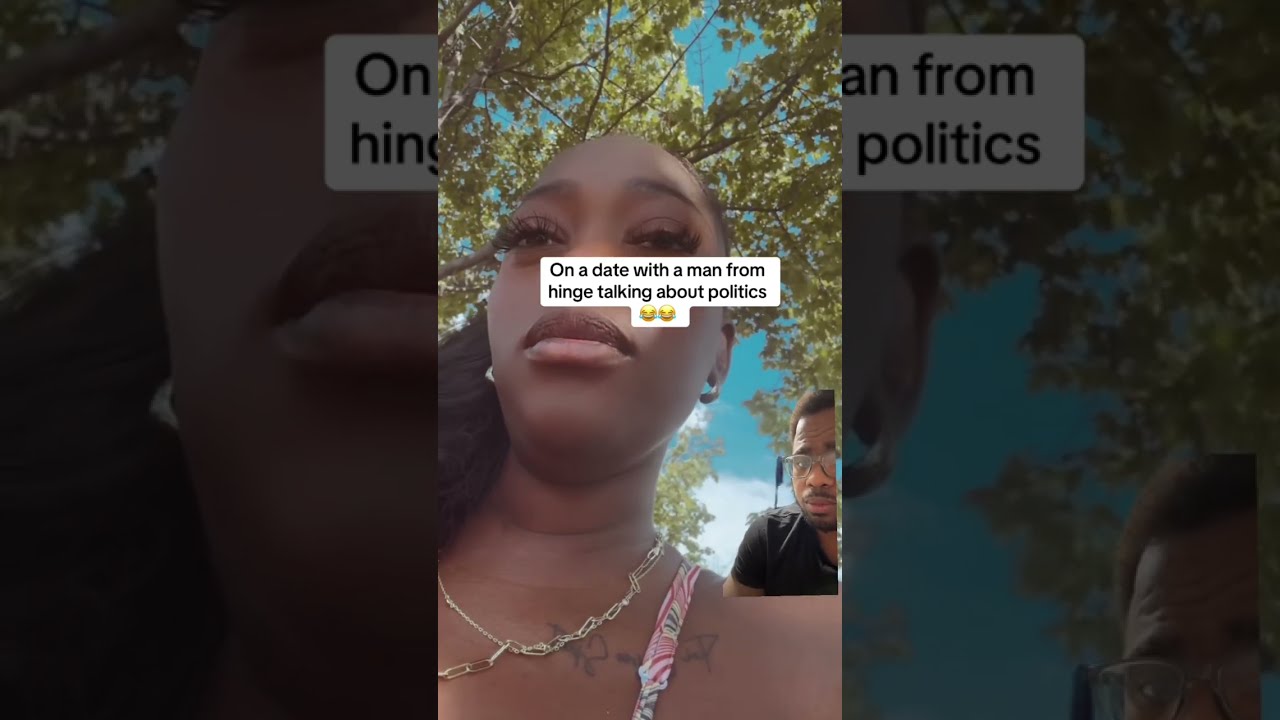
The Setup: Online Chemistry, Real-Life Nerves
We've all been there in some version of this story. You meet someone online, the conversation flows, there's a genuine spark, and then comes the terrifying next step — the in-person meeting where everything either clicks or completely falls apart. For most people, a date that doesn't work out just becomes a mildly awkward story you tell at brunch. For this woman, it became a viral moment she never asked for.
According to her account, she and this man built a real connection online before agreeing to meet. She describes feeling vulnerable going into it — which, honestly, tracks. Online dating requires you to put yourself out there in a way that's uniquely exposing. You're essentially saying 'here I am, I think I'm worth your time,' and then waiting to see if someone agrees. That vulnerability is real, and it matters to the story she's telling.
The Meeting That Went Sideways — And Then Went Viral
We don't know every detail of what went down during their face-to-face encounter, but we know enough: it went badly, and not quietly. Rather than chalking it up to a date that didn't pan out, the man took his disappointment to social media and publicly accused her of catfishing him. And the internet, being the internet, ran with it.
The backlash she describes was swift and harsh — a wave of public judgment directed at her based entirely on his framing of events. This is where the story gets genuinely complicated, because 'catfishing' is a serious accusation. It implies deliberate deception — fake photos, a fabricated identity, a calculated effort to mislead. It's not the same as having a good angle in your profile pictures or presenting yourself in a flattering light, which is something literally every person who has ever posted a photo online has done.
She pushes back hard on the catfish label, and her central argument seems to be this: what he experienced as deception was actually just the gap between expectation and reality — a gap that she believes didn't justify the scale of his public response. And that distinction? It's actually worth sitting with.
The Real Question Nobody Wants to Answer Honestly
Here's the uncomfortable truth about online dating that this story forces into the light: we all curate. Every profile is a highlight reel. Every photo is chosen. That's not catfishing — that's just being human and wanting to be seen favorably. The line between 'presenting your best self' and 'deception' is genuinely blurry, and people draw it in wildly different places depending on who they're judging.
When a man feels disappointed by a date, the socially acceptable response is to simply not pursue it further. What is not the move — and what she's rightfully calling out — is taking that disappointment public in a way that invites a mob. Because once something goes viral, the nuance evaporates. The comment sections don't know her. They didn't see the messages, the photos she shared, the context of the connection. They just see a narrative that's been handed to them by someone who was upset, and they run with it.
Her insistence on defending herself, on telling her own side, is important. Too often the person who gets publicly accused just disappears into the shame of it. She didn't. Whether you ultimately think she misrepresented herself or not, the courage it takes to say 'here's what actually happened from where I was standing' — in the face of a viral pile-on — is not nothing.
What We Think About the Catfish Label Getting Weaponized
This story sits right at the intersection of something we talk about a lot here at Messy Stories: the way public accusations can be used as punishment for simply not meeting someone's expectations. Catfishing is a real thing that causes real harm. But the word has also become a weapon that gets deployed whenever someone feels let down by a date — and that cheapens the actual harm of real deception while also doing serious damage to real people.
We're watching this one closely because the central tension — did she mislead him, or did he just not like what he found? — doesn't have an easy answer, and the fact that it went viral means the stakes for her are genuinely high. The version of events she's telling deserves to be heard on its own terms, not filtered through someone else's hurt feelings and a social media post.
Our take
Okay, we need to be real with each other for a second. Curtis and I have both been on dates that didn't go as hoped, and neither of us ever once thought 'I should post about this publicly and name the person.' That's not a normal reaction to disappointment — that's punishment. And the fact that it went viral means a whole crowd of strangers got to pile on someone they've never met, based entirely on one person's account of one bad date. That's a lot of damage to do to someone over hurt feelings. Now — could there be more to the story? Sure. There always is. But her willingness to come forward and tell her side, while clearly still processing the humiliation of it, tells us something. We're not calling it yet, but we know which way we're leaning.
A date that doesn't work out is just a date that doesn't work out — the moment it becomes a public accusation, someone has crossed a line that no amount of disappointment justifies. Her story is a reminder that vulnerability in dating is brave, and weaponizing it is not.