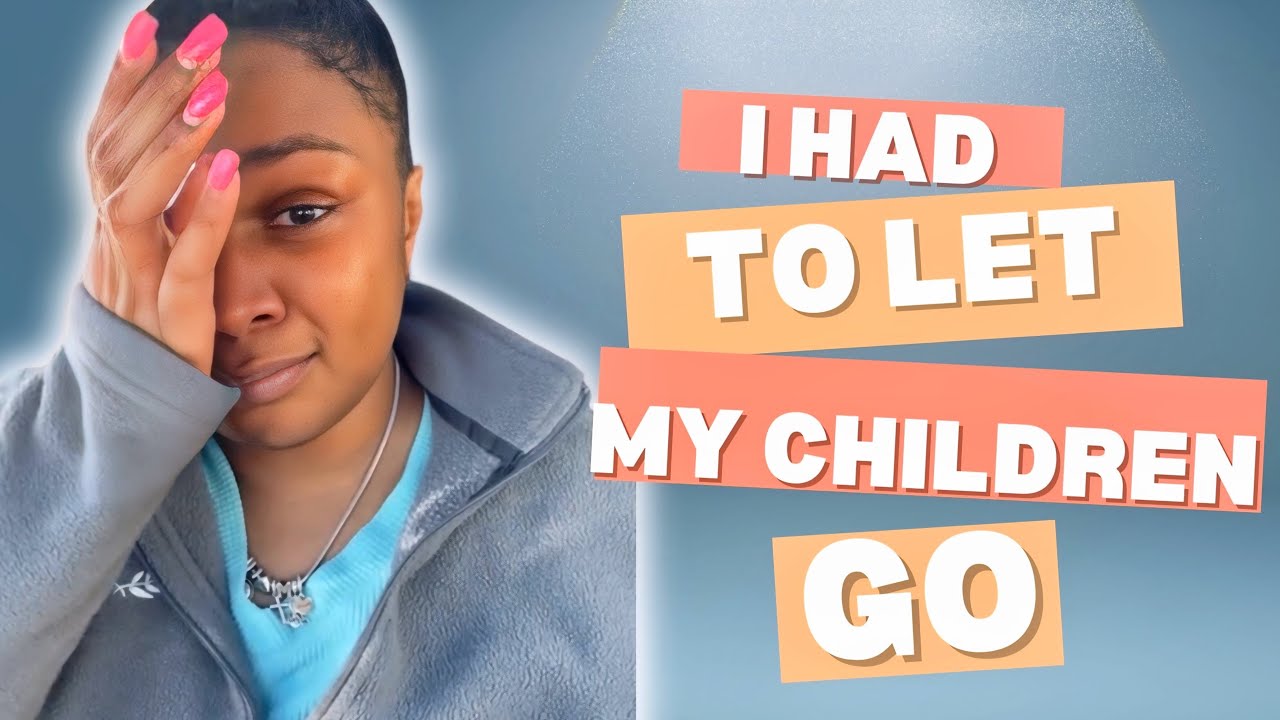
Let's Set the Scene: Single Parenting Is Not for the Faint of Heart
Before we even get to the incident that broke the camel's back, we need to sit with what this mother was already carrying. Single parenting — and we mean truly single, not the 'co-parenting where both people actually show up' version — is a particular kind of exhausting that people who haven't lived it genuinely cannot fathom. You are the disciplinarian AND the comforter. The breadwinner AND the homework helper. The one who enforces the rules AND the one who has to be emotionally available when the rules cause tears. There is no tag-out. There is no 'wait until your father gets home.' It is just you, every single day, running on whatever is left in the tank after the world has already taken its cut.
This mother was navigating all of that while also dealing with financial strain and co-parenting complications — which, if you've ever tried to raise kids with someone you're no longer with, you know adds a whole separate layer of stress that has nothing to do with the children themselves. Miscommunication, inconsistent boundaries between households, the emotional residue of a broken relationship — it all bleeds into the parenting. She wasn't just tired. She was structurally overwhelmed, and the system she was operating in had very few places to catch her if she fell.
Disrespect Has a Cumulative Weight — And Then It Compounds
Here's something we don't talk about enough in parenting conversations: disrespect from your own children is a specific kind of wound. It doesn't matter how much you love them or how much you've sacrificed — when the people you've poured yourself into start treating you like you don't matter, it chips away at something fundamental. And this mother wasn't dealing with the occasional eye-roll or slammed door. By her account, the disrespect had become a real, ongoing pattern that she was carrying alongside everything else.
Now, we're not here to villainize her kids. Children act out for all kinds of reasons — instability, unprocessed emotions, testing limits because no one has held them firmly enough, or sometimes just because they're going through something they don't have the language to explain. But understanding the 'why' behind behavior doesn't make it easier to absorb when you're already running on empty. This mother was trying to hold a line while simultaneously being the only financial, emotional, and logistical support in the house. That is an impossible math problem. And somewhere in the middle of it, one of her children crossed a line that she describes as significant — a specific incident that she felt was categorically different from the everyday friction. That moment, whatever it was, became the thing she couldn't unknow.
The Decision: Giving Up, or Getting Real?
This is where the story gets genuinely complicated, and honestly, where we think it's most worth slowing down. Because the phrase 'giving up your kids' carries enormous social weight — especially for mothers, who are culturally expected to absorb an unlimited amount of pain in service of their children without ever reaching a limit. A mother who says 'I cannot do this anymore' is met with judgment that a father in the same situation almost never faces. And that double standard is worth naming loudly before we say anything else.
What this mother did — deciding that her children would be better served living with their father — is not the same as abandonment. It is a custody restructuring. It is an acknowledgment that the current arrangement was not working, not just for her, but for everyone inside it. Children who are watching their mother deteriorate under impossible pressure are not thriving. Children who are acting out in ways serious enough to push a parent to a breaking point are telling you something about what they need, even if the message is coming out sideways. Sometimes the most honest, most loving thing a parent can do is say: I am not the right environment for you right now, and I am not willing to pretend otherwise just to avoid judgment.
Does that make it easy? Absolutely not. The emotional toll she describes is real and it is heavy. But easy and right are not the same thing, and this story refuses to let us pretend they are.
Our take
Curtis and I went back and forth on this one, and honestly? We landed in the same place. The people who will be quickest to judge this mother are almost certainly people who have never been solely responsible for children while financially strained, co-parenting with complications, and absorbing ongoing disrespect — all at the same time. That is not a character flaw situation. That is a human capacity situation. We don't know what the final incident was, and we're not going to pretend we do. But we know that a mother who is honest enough to say 'this isn't working and I need to change it' is doing something that takes more courage than grinding yourself into dust and calling it devotion. We're not saying it's without pain or consequence. We're saying it's real. And real deserves more grace than the internet usually gives it.
Sometimes the bravest parenting decision isn't the one that looks the most selfless from the outside — it's the one that's actually honest about what everyone in the family needs. This story isn't over, and neither is hers.