The Kind of Stable That Turns Out to Be a Stage Set
There's a specific kind of grief that comes with realizing the life you thought you were living was actually a performance. Not a lie told with cruelty, necessarily — sometimes it's a lie told with desperation, or shame, or the very human desire to just... keep things together. But a lie nonetheless. And that's exactly the situation at the center of this story.
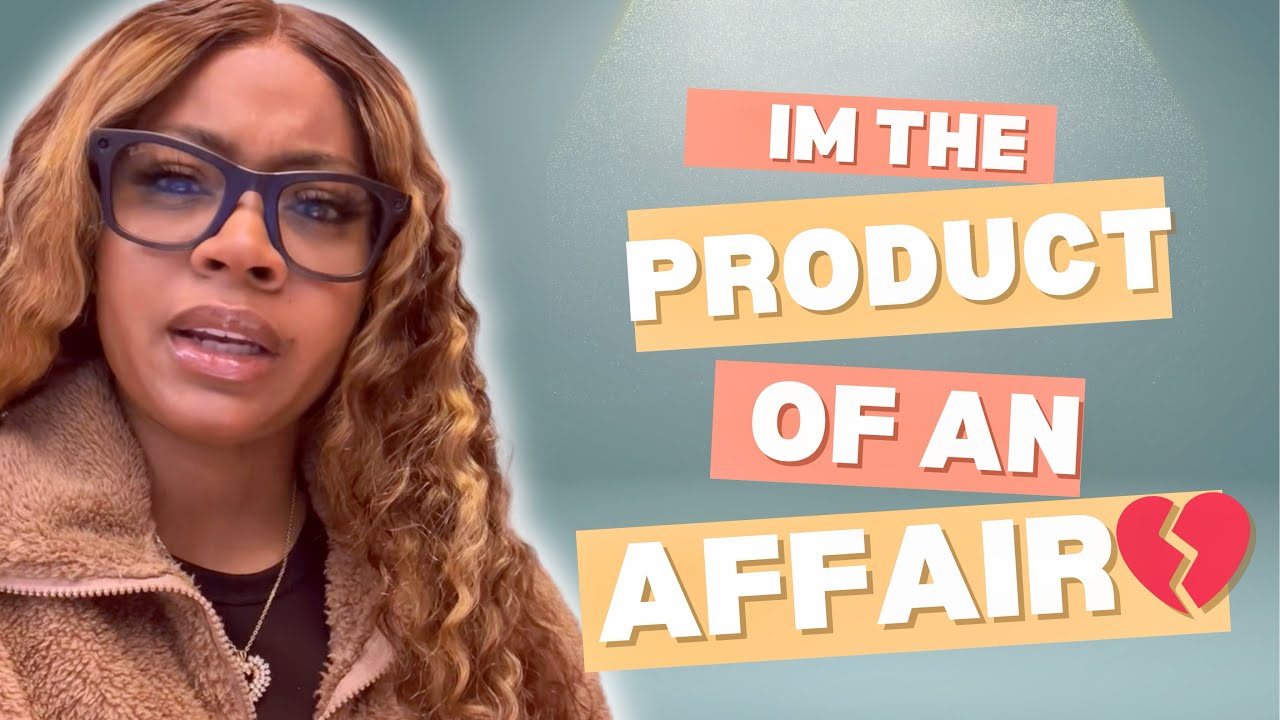
The person sharing this grew up believing their family was intact. Stable. Real. The kind of foundation most of us take for granted — you know who your people are, you know where you come from, you know your own story. Except they didn't. Because somewhere underneath the normalcy, a secret had been buried: they were born as the result of an affair. Their entire origin story was different from the one they'd been handed.
We talk a lot on this site about betrayal between partners, but this one cuts differently. This isn't finding out your spouse cheated. This is finding out the betrayal happened before you even had a say — before you existed — and that its consequences became the invisible architecture of your entire life. That's a specific kind of disorienting we don't have great language for.
When Your Identity Becomes a Crime Scene
Here's what makes this revelation so uniquely destabilizing: it doesn't just change the facts. It changes the meaning of every memory you have.
Think about it. The holidays, the family photos, the way certain adults in your life treated you — all of it gets filtered through this new lens. You start asking questions you never thought to ask before. Did everyone know? Did some people know? Were there looks exchanged over your head that you were too young to read? Was there tension you explained away as 'just how adults are' that was actually about YOU and the secret of your existence?
That retroactive unraveling is genuinely one of the most psychologically brutal things a person can go through. Grief counselors actually have a name for this kind of experience — it's sometimes called a 'biographical disruption,' when a single piece of information forces you to reconstruct your entire personal narrative from scratch. It's not just emotional. It's cognitive. Your brain has to do an enormous amount of work to reconcile who you thought you were with who you apparently are.
And then there's the family drama that erupts when the truth surfaces. Because secrets like this don't just affect the person who discovers them — they send shockwaves through everyone who knew, everyone who suspected, and everyone who is now being forced to have conversations they spent years avoiding. The narrator describes intense emotional responses and significant fallout, which honestly? Tracks. There is no clean way for this kind of truth to come out.
The Questions That Don't Have Easy Answers
One of the things we keep coming back to with this story is how it raises questions that don't resolve neatly — and we think that's worth sitting with rather than rushing past.
Like: what do you do with love that was real, even if the circumstances behind it were a lie? If the person who raised you loved you genuinely, does the affair that created you change that? Most of us would say no, intellectually. But emotionally? That's a whole different conversation. The heart doesn't really do logic when it's in freefall.
And then there's the question of the biological parent — whoever was on the other side of that affair. Are they in the picture? Do they even know? Does the narrator want them to be? There's no universal right answer here. Some people in this situation feel compelled to find their biological roots; others feel like that search would be a betrayal of the family, however imperfect, that actually raised them. Both responses are valid. Both are also incredibly complicated.
What strikes us most is the framing the narrator uses: the foundation of who they thought they were was built on a lie. That's not dramatic language. That's accurate. Identity is built on story, and when the story changes this fundamentally, you're not just processing a family secret — you're essentially meeting yourself for the first time.
Our take
Curtis and I watched this one and then just sat there for a second. Because there's messy, and then there's THIS — where the mess isn't even something you participated in. It was handed to you at birth, wrapped in a version of normal that was never quite real. What gets us is that this person didn't do anything wrong. They didn't snoop, they didn't push — the truth just found them, the way truth eventually does. And now they're the one holding the wreckage. That's not fair. It's also, unfortunately, how family secrets tend to work. The people who kept the secret got years of protection. The person the secret was ABOUT gets the bill. We're rooting hard for this narrator to find their footing — not because the story wraps up clean, but because they clearly have the self-awareness and the guts to actually face it. That matters more than people realize.
Some truths don't set you free immediately — first they just set everything on fire. But knowing, however painful, is always the beginning of something realer than the lie.